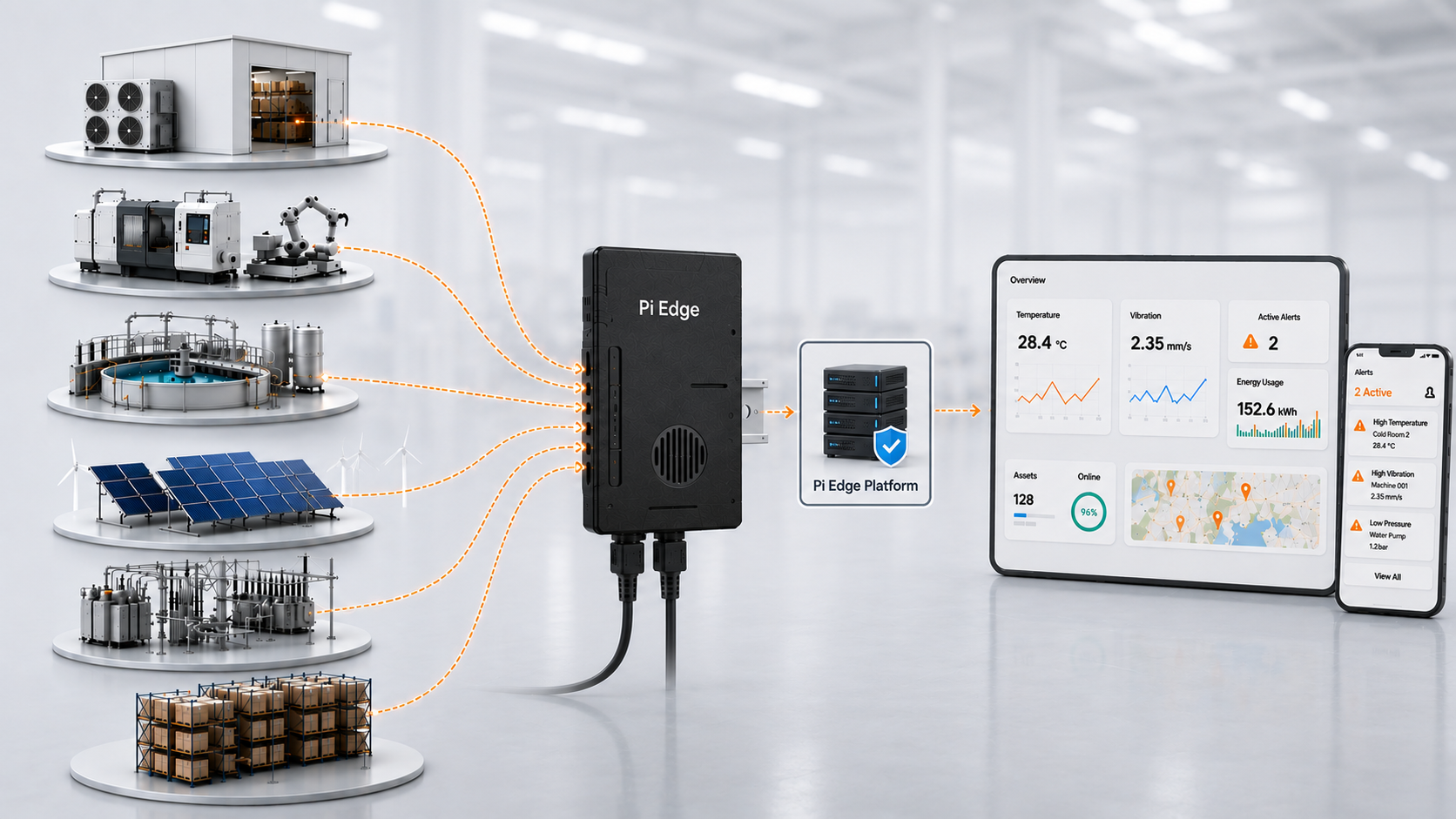

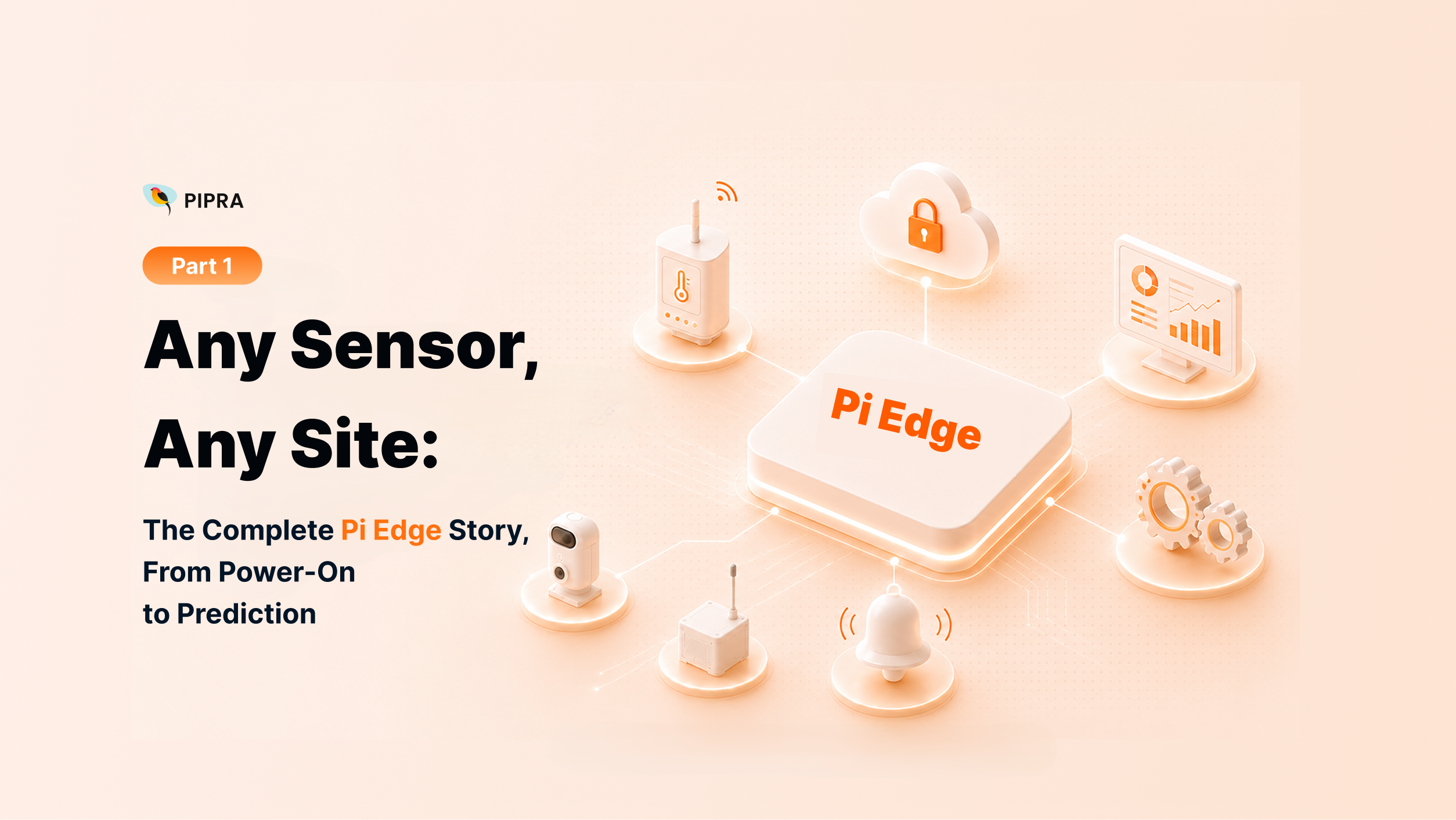
Pi Edge is PIPRA's IoT and edge intelligence platform it connects your sensors and site data, lets you monitor everything from one place, and alerts you before small issues become costly problems, scaling from one site to many at your own pace. This series walks through that journey step by step, and this first post sets the stage: why connected operations get hard as they grow, and what changes when one platform handles the whole thing instead of a pile of separate tools. The benefit by the end of it: less manual monitoring per device, earlier detection of problems, and one place to see your whole operation.
Our Any Sensor. Any Site. One Platform. From the Moment a Device Powers On to the Moment It Predicts a Failure blog described what happens between the moment a device powers on and the moment it predicts a failure. That post covered the whole journey at a walking pace. This series slows down and looks at each stretch of the road properly because the interesting part isn't any single feature. It's that the stretches connect, with nothing manual in between.
Here's the thing most people underestimate about connected operations: the hard part was never one sensor.
One sensor is easy. Someone plugs it in, someone else writes a small piece of software to read it, and within a week there's a chart on a screen. Everyone's pleased.
The trouble starts at sensor number forty. And sensor number forty is a different make from the first thirty-nine, sitting in a different building, measuring something nobody planned for when the first chart was built. Now there's a second piece of software, a second chart, a second person who knows how it works. Multiply that across sites and years, and you don't have a connected operation you have a pile of small, separate projects that nobody can see all at once. Pi Edge was built to stop that pile from forming.
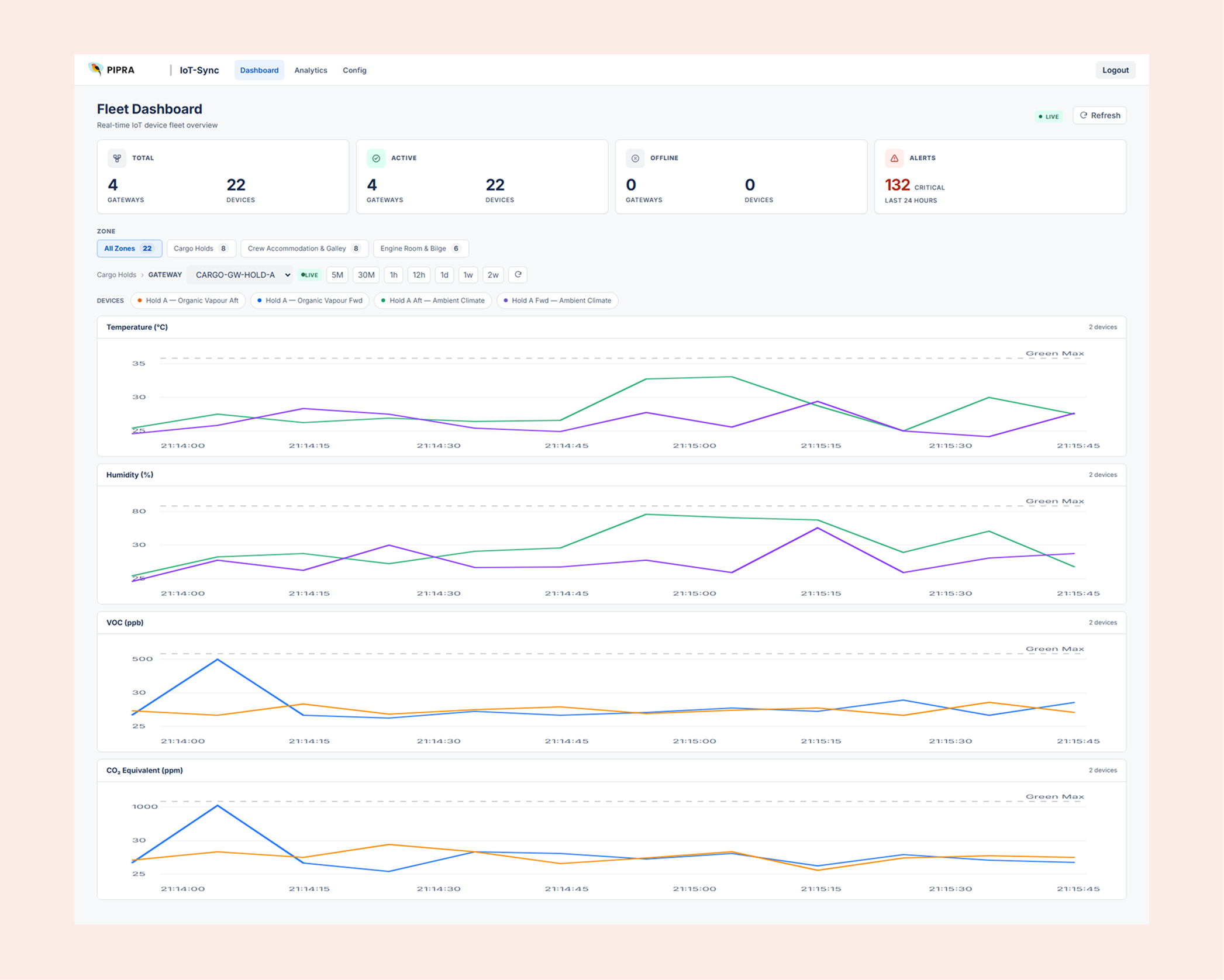
Every device that joins your operation passes through the same five moments. In most setups, each one is a separate project. In Pi Edge, they're one continuous flow.
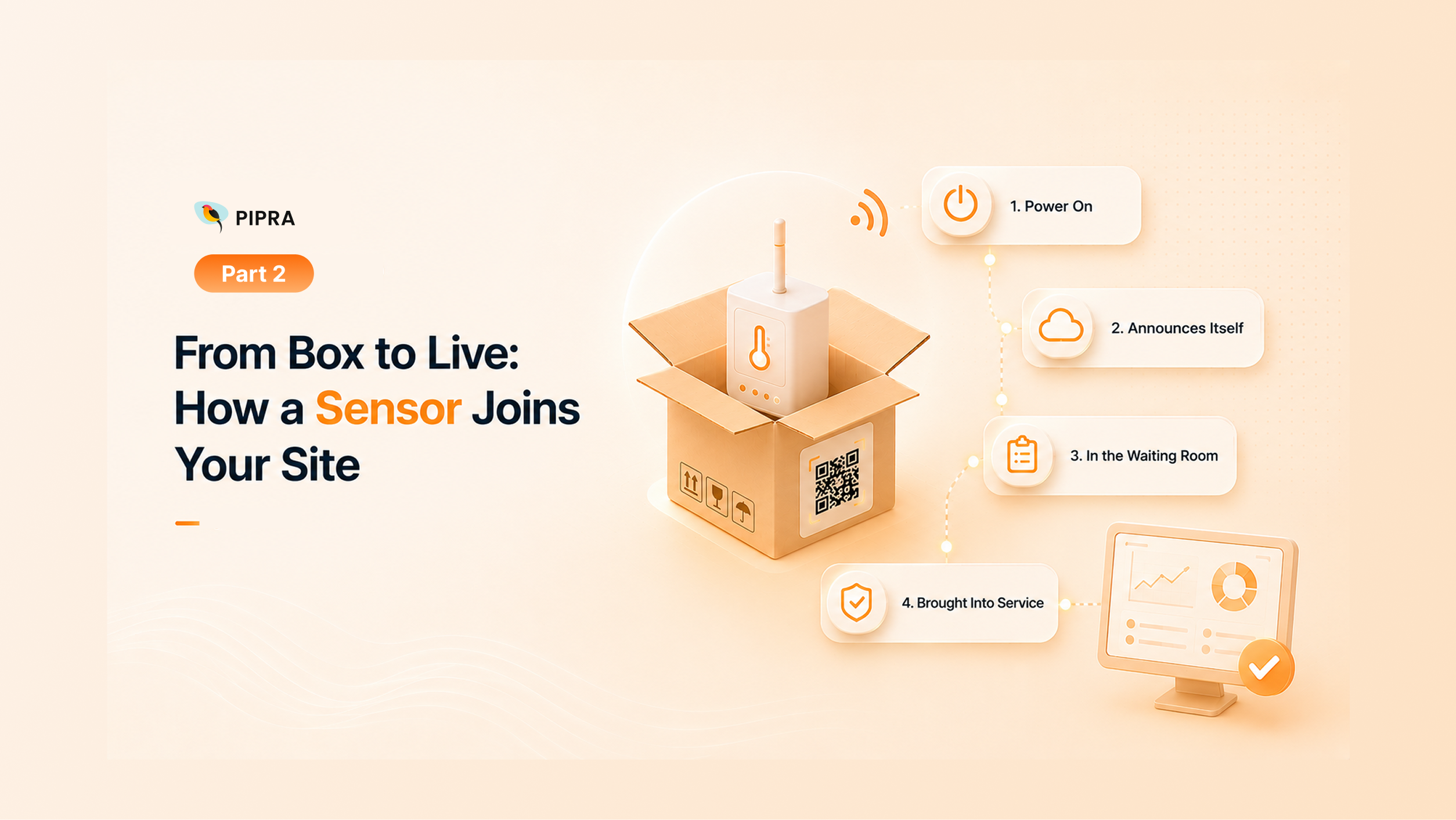
Discover: A new sensor or gateway is switched on, and it announces itself. Nobody types in an address. Nobody loads a configuration file at the site. It appears in a list, waiting to be brought into service.
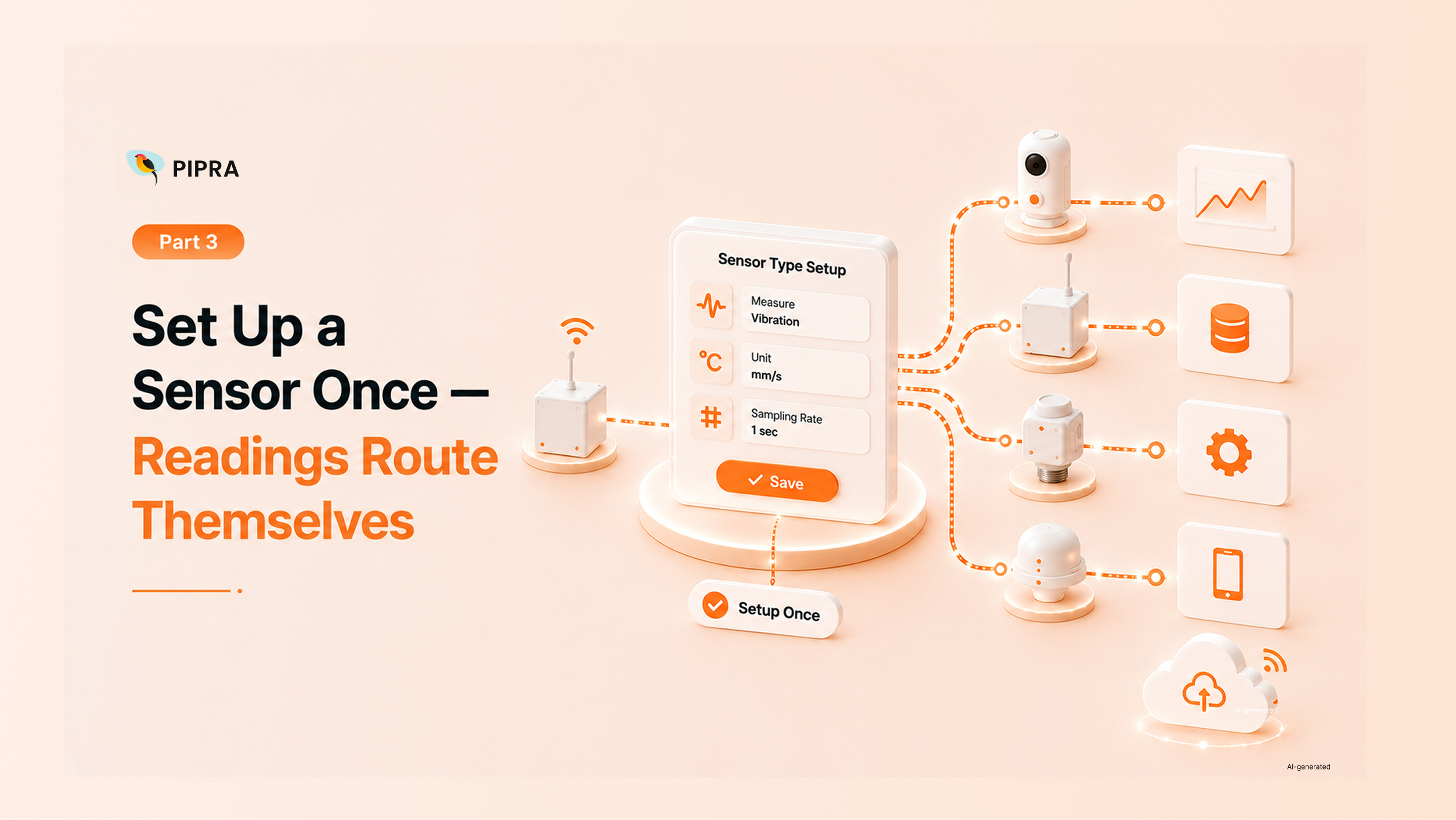
Configure: You describe what the sensor is and what it measures once. Every device of that type from then on is understood automatically, including types nobody anticipated when the system was first set up.
Route: Readings make their own way to wherever they need to go: your dashboards, your business systems, your customers' applications. No custom wiring per device. If a connection drops, readings wait safely and arrive when it returns.
Analyze: Readings become trends. Trends become alerts. Alerts arrive while there's still time to do something about them, rather than confirming what already went wrong.
Scale: What worked for ten devices in one building works for a thousand across many updated, monitored, and managed from a browser, with nobody driving to a site.
Each post in this series takes one of these and shows what it actually looks like in the product.
Pi Edge didn't start as an idea on a whiteboard. It grew out of a real deployment with the Department of Agriculture, Government of Kerala - real sites, real conditions, real people who needed it to work without a specialist standing next to it.
That origin shaped the product more than any feature list could have. Field conditions are unforgiving: connections drop, hardware varies between batches, and the person commissioning a device at seven in the morning is not the person who designed the system. Every decision in Pi Edge traces back to one of those realities.
It's also why the product assumes variety instead of resisting it. Deployments don't get to choose uniform sensors, and a platform that only works with sensors it already knows isn't much of a platform.
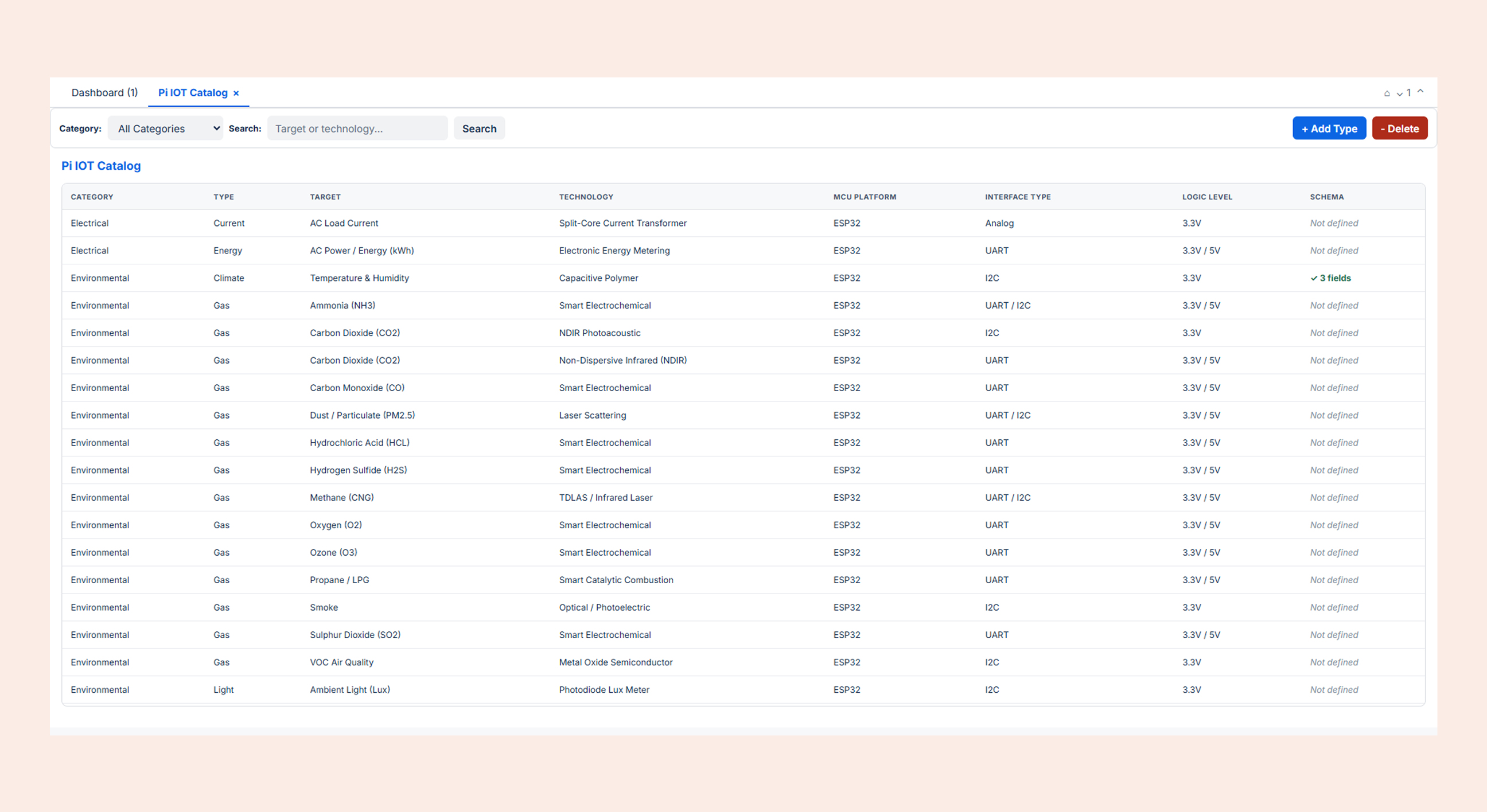
Pi Edge handles the part of your operation that happens in the physical world - what's actually going on at a site, right now. That's valuable on its own, but it's considerably more valuable connected to everything else.
That's why Pi Edge sits inside the wider PIPRA family. Pi ERP runs the business side: finance, procurement, sales, and the records that everything else refers back to. WarePro runs warehouse and inventory operations. MRO handles maintenance, spare parts, and keeping assets ready. RealMeds covers traceability. Kuyil adds an AI layer for search, insight, and decision support across all of it.
Pi Edge is where real-world data enters that picture. A reading from a sensor doesn't have to end its life as a line on a chart - it can raise a maintenance job, adjust a stock figure, or trigger a workflow, without anyone copying a number from one system into another.
If you already run other systems, that's fine too. Pi Edge is built to add a layer of visibility on top of what you have, not to replace equipment you've already invested in.
Four more posts, one for each part of the journey:
Part 2 — From Box to Live in Minutes: How a New Sensor Joins Your Site on Its Own. What actually happens between switching a device on and having it in service, and why nobody has to configure anything at the site.
Part 3 — Set Up a Sensor Once, Its Readings Find Their Own Way From There. How a sensor type nobody planned for gets added without an engineering project, and how its readings reach their destination reliably — including when the network doesn't cooperate.
Part 4 — A Thousand Sensors Across Every Site, Managed Without Leaving Your Desk. Updating software, checking on devices, and knowing immediately when one goes quiet — across an entire fleet, from a browser.
Part 5 — When Your Sensors Warn You Before Something Breaks. Turning readings into trends, trends into alerts, and alerts into action while there's still time.
It's entirely possible to assemble something like this from separate pieces. Plenty of organisations have: one tool for device management, another for data collection, a third for dashboards, and a set of scripts holding it together that one person understands.
It works, until something changes. A new sensor type. A new site. The person who wrote the scripts moves on.
The argument for one platform isn't that any individual piece is better. It's that the joins between the pieces are where operations actually break -and there aren't any joins here. A device discovered in the first step is the same device you update in the fourth and get an alert about in the fifth, without anything being re-entered or re-integrated along the way.
If any of this sounds like a problem you're currently solving with spreadsheets, site visits, or a specialist who's the only one who knows how it all fits together - we'd be glad to show you what Pi Edge looks like running.
Next in the series: Part 2 - From Box to Live in Minutes: How a New Sensor Joins Your Site on Its Own.