
Part 3 of the Pi Edge series. New to the series? Start with
Pi Edge is PIPRA's IoT and edge intelligence platform it connects your sensors and site data, lets you monitor everything from one place, and alerts you before small issues become costly problems, scaling from one site to many at your own pace.
This post covers what happens once a device is live: how you teach the system to understand a new kind of sensor in minutes rather than weeks, and how its readings automatically reach the dashboards and systems that need them.
The benefit: your data works with the rest of your operations dashboards, business systems, or maintenance tools without being locked into a narrow list of approved hardware, and without losing a reading when a connection drops.
Every connected system works beautifully with the sensors it was designed around.
The test is what happens with the forty-first one a different make, measuring something the original design didn't anticipate, bought because it was the right sensor for that job rather than because it fitted the system.
In most setups, that's the moment a small request turns into a project. Someone has to make the system understand a sensor it's never met. That means development work, testing, a release, and a wait. The request was "we'd like to measure vibration on this machine." The answer is "we can look at it next quarter."
This post is about why that answer isn't necessary.
It's worth being precise about where the weeks actually went, because it wasn't the obvious place.
The sensor works fine. It's already measuring correctly and already transmitting. The problem is purely that the receiving system doesn't know how to interpret what it's saying a bit like receiving a perfectly clear message in a language nobody in the building reads.
Traditionally, teaching a system a new language means changing the system. Software gets modified, tested, and re-released to every device in the field. And because that's expensive, organisations start avoiding it: they standardise on a narrow set of approved sensors, decline requests that don't fit, and slowly let their equipment choices be dictated by their software rather than their operations.
That's a bad trade, and it's an avoidable one.
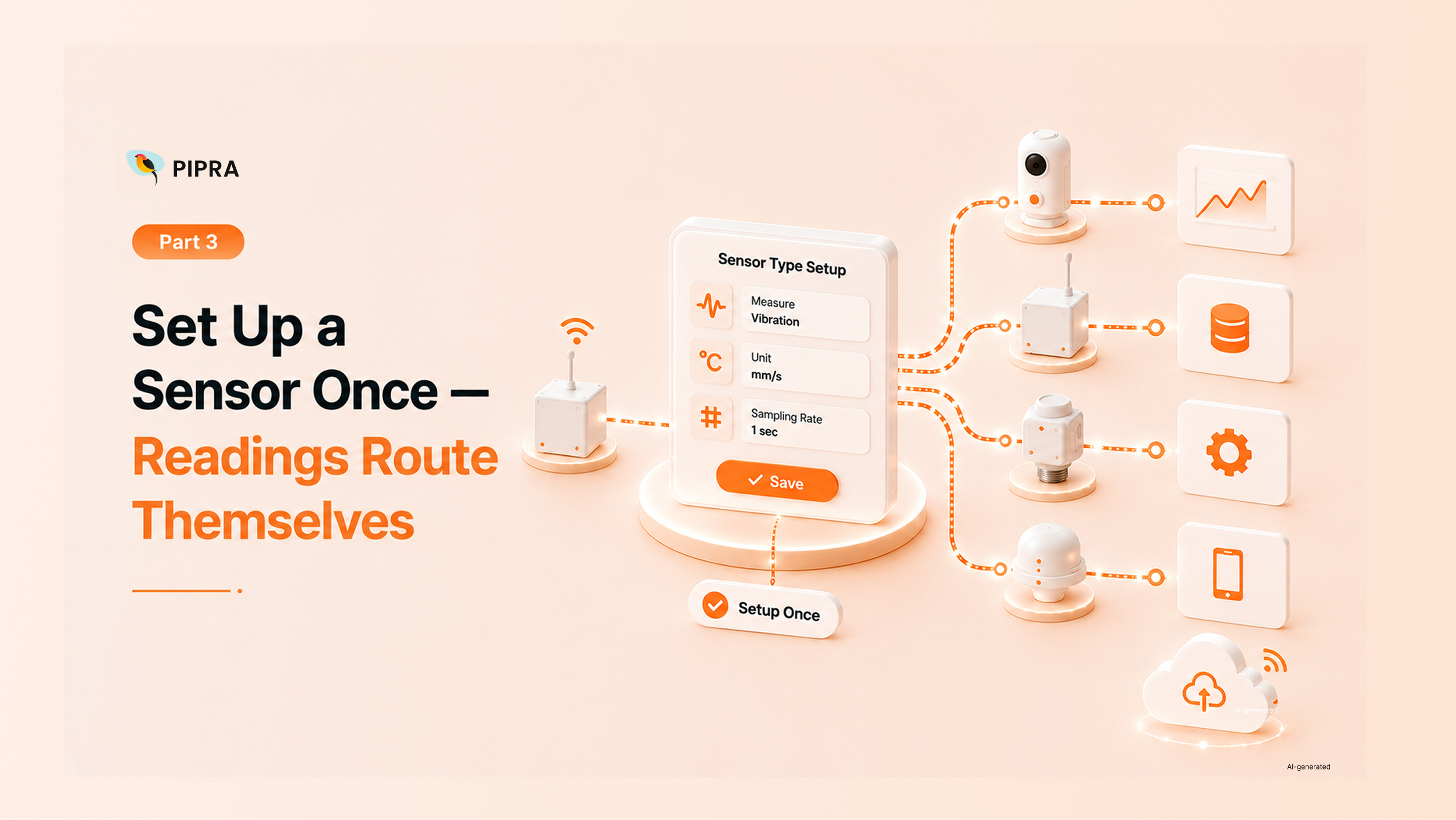
In Pi Edge, teaching the system a new kind of sensor is something you set up, not something you build.
You describe the sensor: what it measures, what those measurements are called, what units they're in. You save it. From that moment, every device of that type is understood the one in front of you and every one you install afterwards.
No software changes. No release. No waiting for a development cycle. The people who understand the equipment can make the change themselves, on the day they need it, without raising a ticket with anyone.
The practical consequence is that your equipment decisions become free again. If a better sensor exists for a job, you can use it. If a supplier changes their product line, you adapt in an afternoon. If a site needs to measure something nobody anticipated, they can.
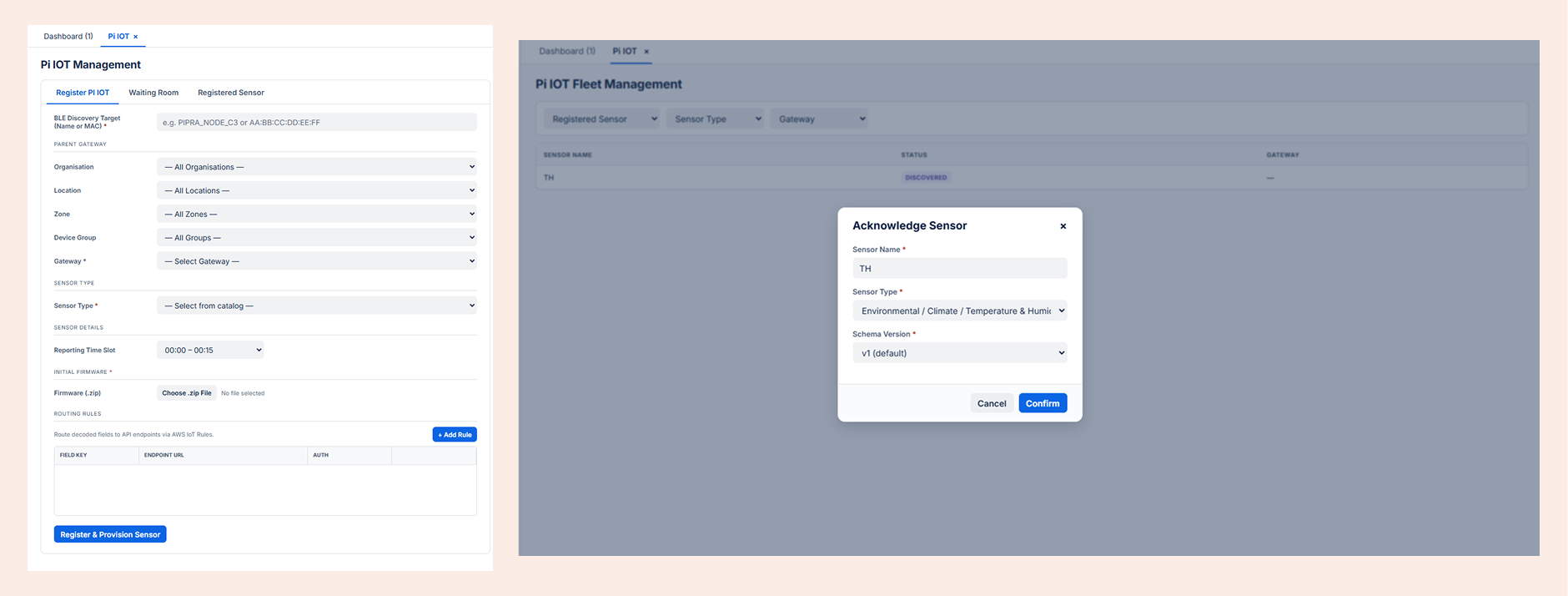
There's a difference between doing something once and doing something once per device, and it's the difference between a pilot and a rollout.
Describe a sensor type once, and every device of that type inherits it. Ten of them, or a thousand, across one site or forty. Nobody repeats the setup, and nobody has to remember which devices were configured which way because they weren't configured individually in the first place.
This is also what makes different generations of the same product manageable. Equipment gets revised. A supplier ships an updated version that reports slightly differently. Rather than that becoming a problem that ripples through your fleet, it's simply another described version, and devices are moved to it when you're ready. Older equipment keeps working exactly as it did.
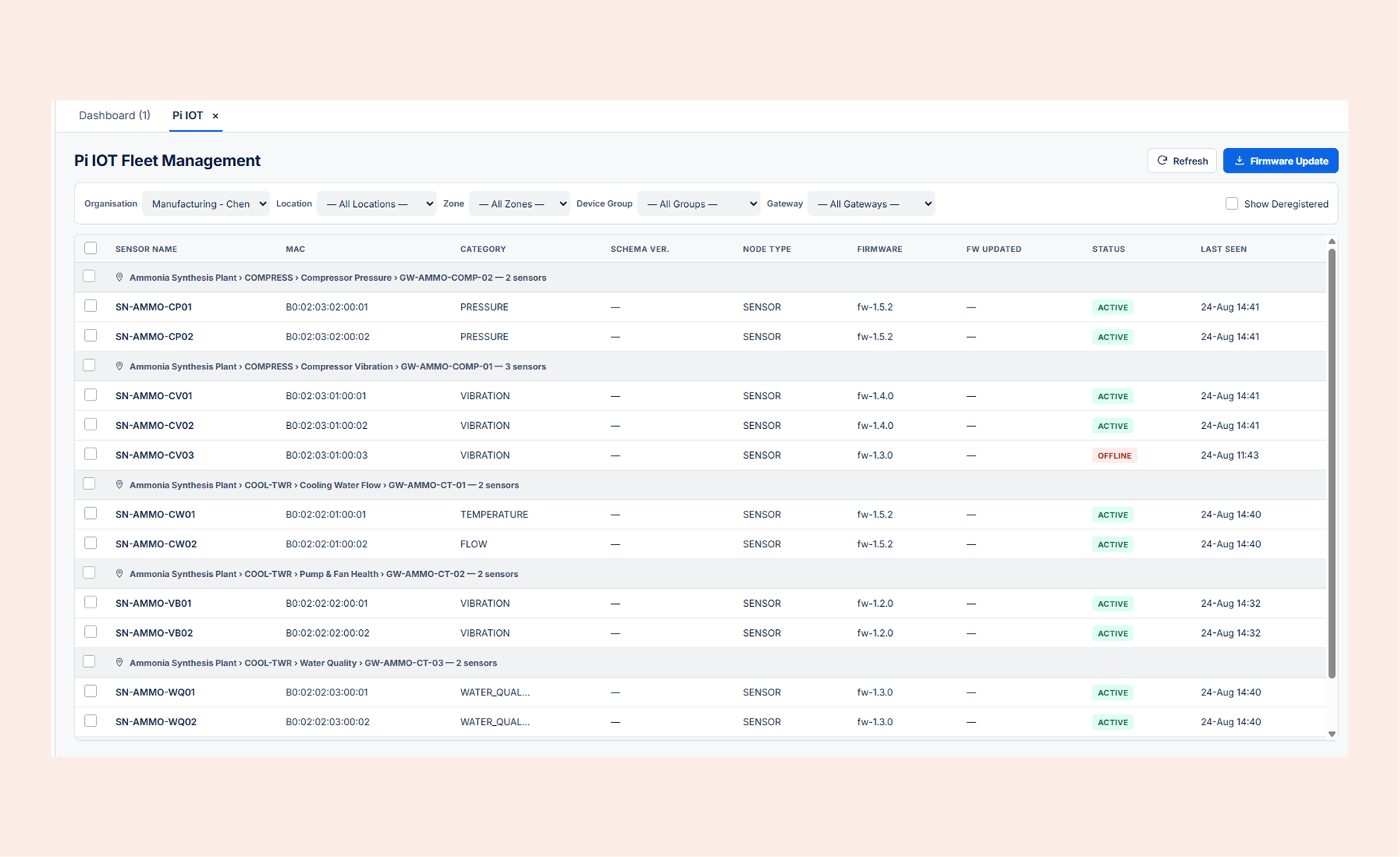
Getting a system to understand a sensor is only half of it. The reading then has to reach the places that need it -your dashboards, your business systems, an application your own customers use.
This is the other place where connected projects traditionally accumulate hidden work: a separate connection built for each device, each destination, each combination of the two. It works when there are five. It becomes a maze at fifty, and the person who built it becomes the only one who can safely change it.
Pi Edge routes readings by policy instead. You say where a kind of reading should go, and readings go there - for every device it applies to, including devices installed next year that don't exist yet. Nothing is wired by hand per device. Adding a destination doesn't mean revisiting every sensor, and adding a sensor doesn't mean revisiting every destination.
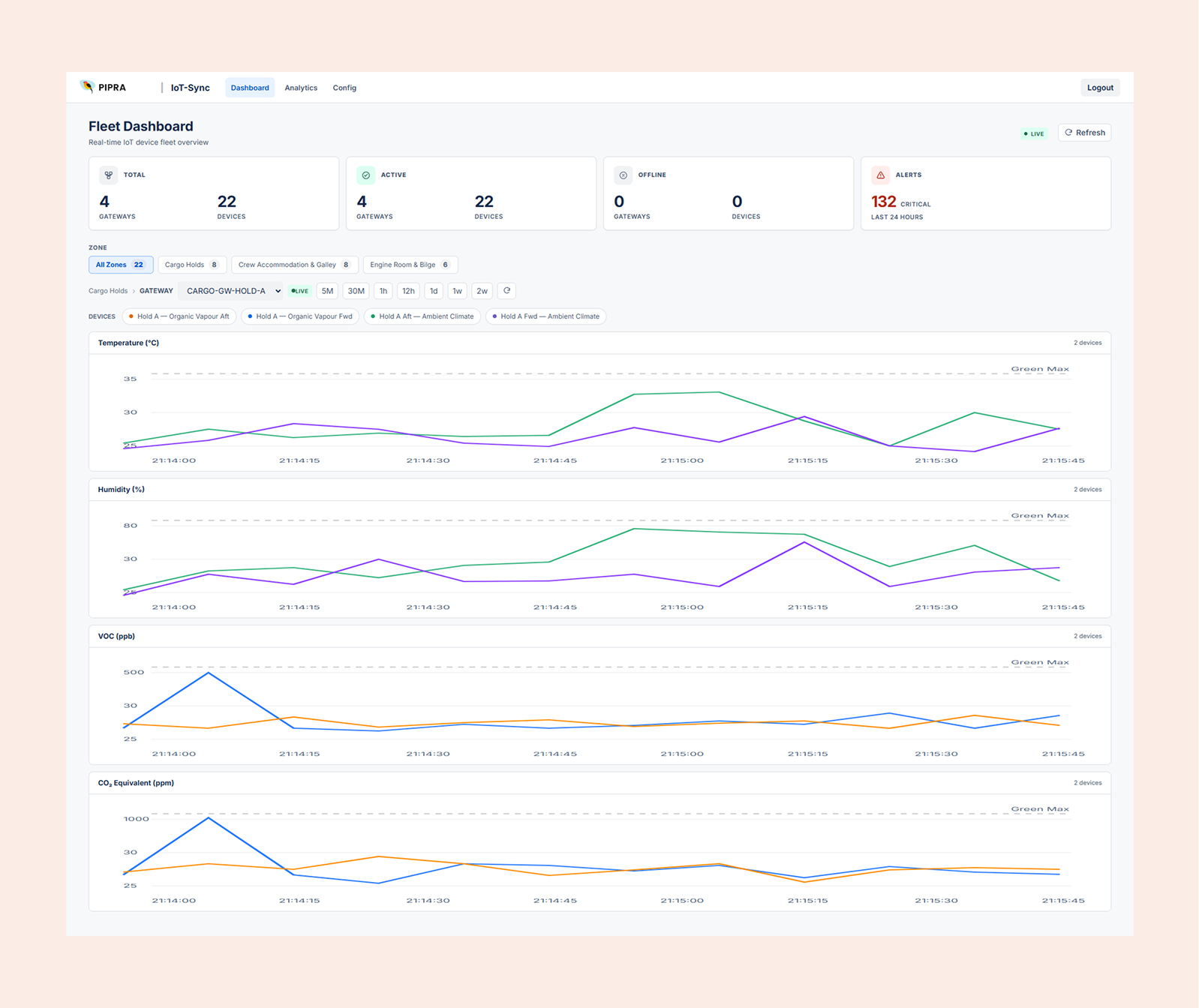
Field sites are not offices. Connections drop. Rural sites lose service. Weather happens. Somewhere in your operation, right now, something is briefly unreachable.
The important question isn't whether that happens - it's what happens to the readings taken during it.
In a lot of setups, the honest answer is that they're gone. The sensor measured correctly, the reading was taken, and it vanished because there was nowhere to put it at that moment. Nobody's alerted, because there's no record of what didn't arrive. You simply have a gap in your history that you may never notice.
Pi Edge treats readings as too valuable for that. A reading is safely held the moment it's taken, and delivered when delivery is possible. A connection that comes back after an hour, or a day, brings its readings with it. Your history stays whole.
For anything you care about compliance records, equipment history, evidence of conditions during an incident a complete record and a mostly-complete record are not the same thing.
For anyone who makes sensors rather than just deploying them, the same mechanism solves a different problem.
Getting a new product from working prototype to a customer's live deployment usually involves a stretch of integration work that has nothing to do with the sensor itself connecting it, making a platform understand it, getting clean data into whatever the customer actually uses. That stretch is unpaid, unglamorous, and stands directly between your product and its revenue.
Describing a sensor rather than building an integration for it compresses that stretch dramatically. A new product becomes a setup exercise on the day you're ready, which means customer pilots start sooner and go live faster.
We cover this properly in a separate post for sensor manufacturers and integration partners.
Understanding a sensor and delivering its readings are the same story, which is why they're in one post.
In a stack of separate tools they'd be two systems with a join between them and that join is exactly where things break when something changes. Here, describing a sensor and knowing where its readings go are two parts of one setup, applied to every device it covers, including the ones you haven't bought yet.
If "we'd like to measure this" currently gets answered with "we'll look at it next quarter," that's the gap worth closing and we'd be glad to show you what it looks like closed.
Next in the series: what changes when the fleet grows from ten devices to a thousand.