
Part 6 of the Pi Edge Series. New to the series? Start with
Pi Edge is PIPRA's IoT and edge intelligence platform. It connects sensors and site data into a single view, monitors conditions continuously, and raises alerts before small issues become costly ones, scaling from one site to many at a customer's own pace. This post is for system integrators and sensor manufacturers: bring your sensor, integrate it with Pi Edge, and earn Pi Edge Certified status, so your customers get a ready-made integration and both organisations benefit from the partnership. Connected operations depend on two kinds of organisations working well together: system integrators who design and deliver solutions for their customers, and sensor manufacturers whose hardware needs to reach a customer's screen to be worth anything.
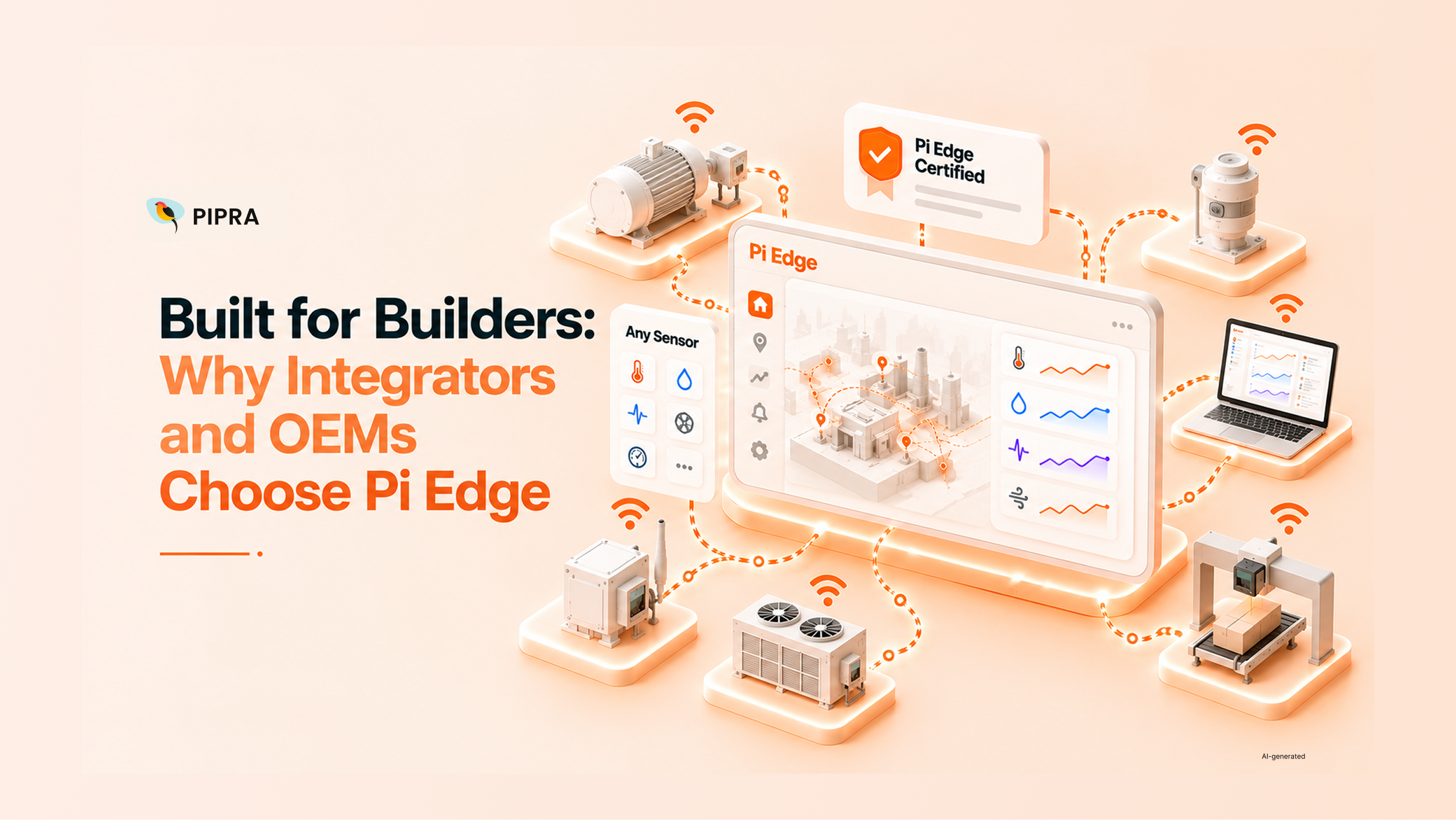
This post sets out what a partnership with PIPRA looks like for each.
Both groups face the same underlying challenge, though they would describe it differently. A significant share of their effort goes into work that adds little strategic value: integration and connectivity work that spans the gap between "the product works" and "the customer can use it." This is the work that erodes margin, delays revenue, and has to be repeated for every engagement.
Pi Edge exists to close that gap. Here's what that means for each group.
The biggest obstacle in industrial projects is rarely technical. It's that the customer already has systems in place, those systems cost a great deal, and they work.
A proposal that starts by suggesting those systems be replaced meets immediate, reasonable resistance. A proposal that starts by building on them meets none.
Pi Edge is designed for the second conversation. It sits alongside what a customer already runs, adds visibility and intelligence on top, and connects the result to their business systems. Existing investments keep working and become more valuable, rather than turning into a migration project nobody asked for.
Whether your customer is a small operation running one facility or a large enterprise running many, the shape of the conversation is the same: connect what they already have, don't replace it.
You can show value in your very first meeting. Getting a sensor connected is a quick setup step, not a build project. That means you can bring up a customer's own equipment, its own site layout, and its own live readings early in the conversation, while you're still shaping the deal, instead of promising it later and hoping it lands.
Each new project costs you less than the last. The groundwork, connecting to systems, cleaning up the data, building the dashboards and alerts, is already done. What you spend your time on is the part the customer is actually paying you for: understanding their operation and setting it up the way they work.
Your best work travels with you. The setup you build for one customer, whether a small warehouse or a large plant, carries over to the next similar customer with small tweaks instead of starting again from scratch. That's how a handful of projects turns into a repeatable practice.
A project can become an ongoing relationship. Once monitoring is live, there's a natural next step: helping the customer act on what the data shows, keeping an eye on things for them, or expanding to more sites. That's steady, recurring work instead of a one-time job.
Fewer surprises, fewer losses. Because the hard, unpredictable part (getting old and new equipment talking to each other) is handled, your projects are less likely to run over budget or drag past schedule.
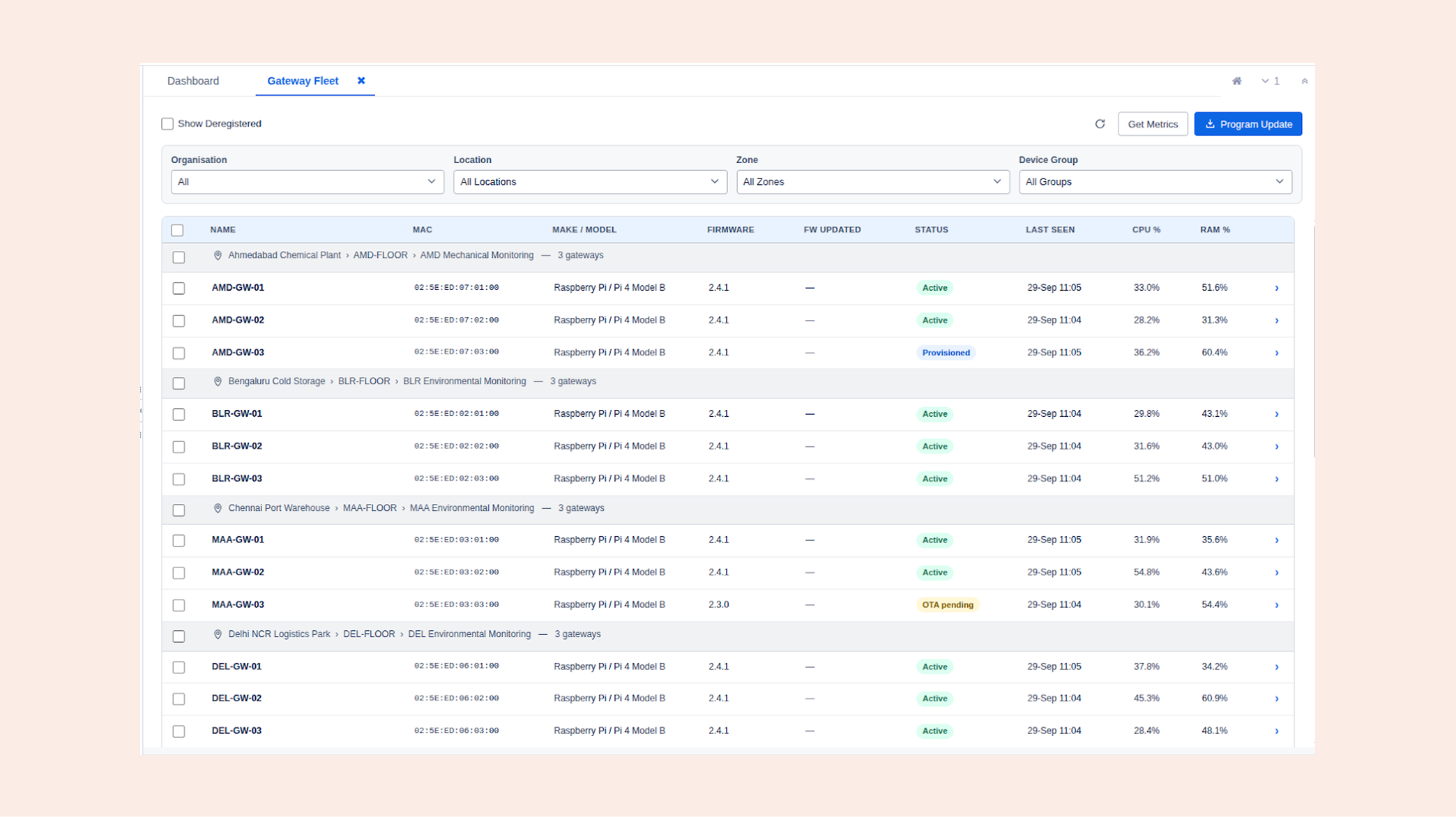
If you build sensors, you already know the sensor is the easy part.
You've solved the hard engineering. The device measures accurately, survives its environment, and is ready to sell. Between that achievement and an actual deployment sits a gap made entirely of integration work that has nothing to do with what your product does.
Every customer needs it connected. Every customer needs its readings to arrive somewhere usable. Every customer's environment differs slightly. Until that work is done, an excellent sensor generates no revenue.
That gap is what Pi Edge closes for you.
Your product gets understood, just once. However your sensor sends its readings, Pi Edge learns how to read it during certification. After that, every unit you ship is recognised the moment it's set up. No custom work, no back-and-forth with your engineers, for every new customer.
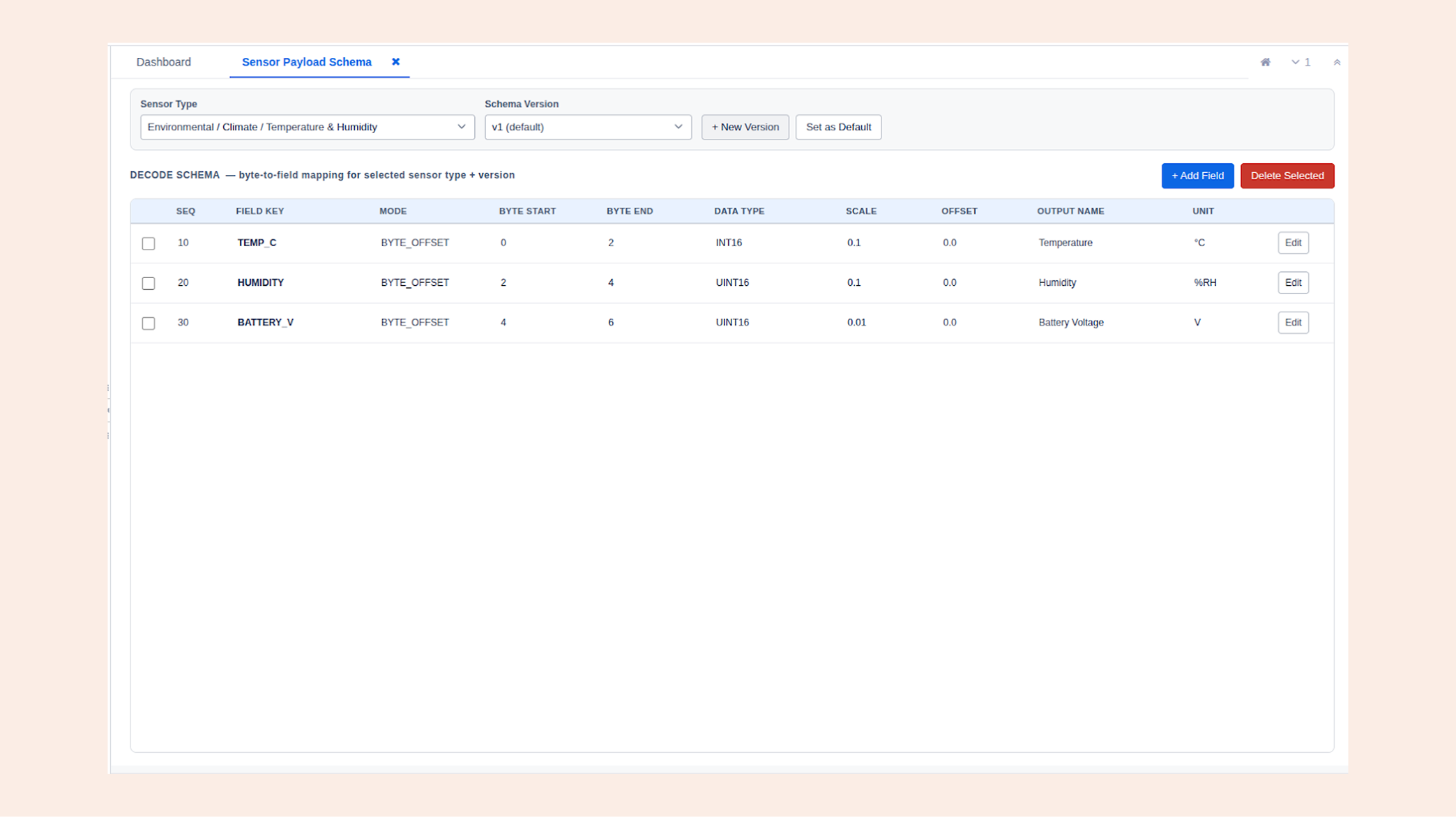
Your customers see clean, meaningful numbers. A raw sensor reading becomes a clearly labelled measurement they can actually understand, sitting right on their dashboard, not a number they have to decode using your spec sheet. That's what shapes their opinion of your product: the reading itself, not the effort it took to get there.
Your pilots test your sensor, not your customer's IT setup. Pilots often stall in the first week over network access or missing equipment that has nothing to do with the sensor itself. Skip that stage, and the pilot finally tests what you actually want tested: how well your product performs.
New products launch faster. A new model, a new type of reading, or the next version of something you already sell goes through the same simple setup as the original, not a fresh integration project. You launch on your own schedule, not your customers.
Pi Edge was not designed in a workshop in search of customers.
It grew out of a real deployment with the Department of Agriculture, Government of Kerala: actual sites, actual conditions, and people who needed it to work without a specialist standing beside it. Everything in the product that seems unusually pragmatic traces back to that origin.
For partners specifically, that history matters in a particular way. It means the awkward realities are already handled: connections that drop, hardware that varies between batches, sites where the person commissioning equipment isn't technical, deployments that grow from one location to many.
Those are the things that turn a promising project into an overrun. They've already been met in the field, rather than waiting to be discovered during your engagement.
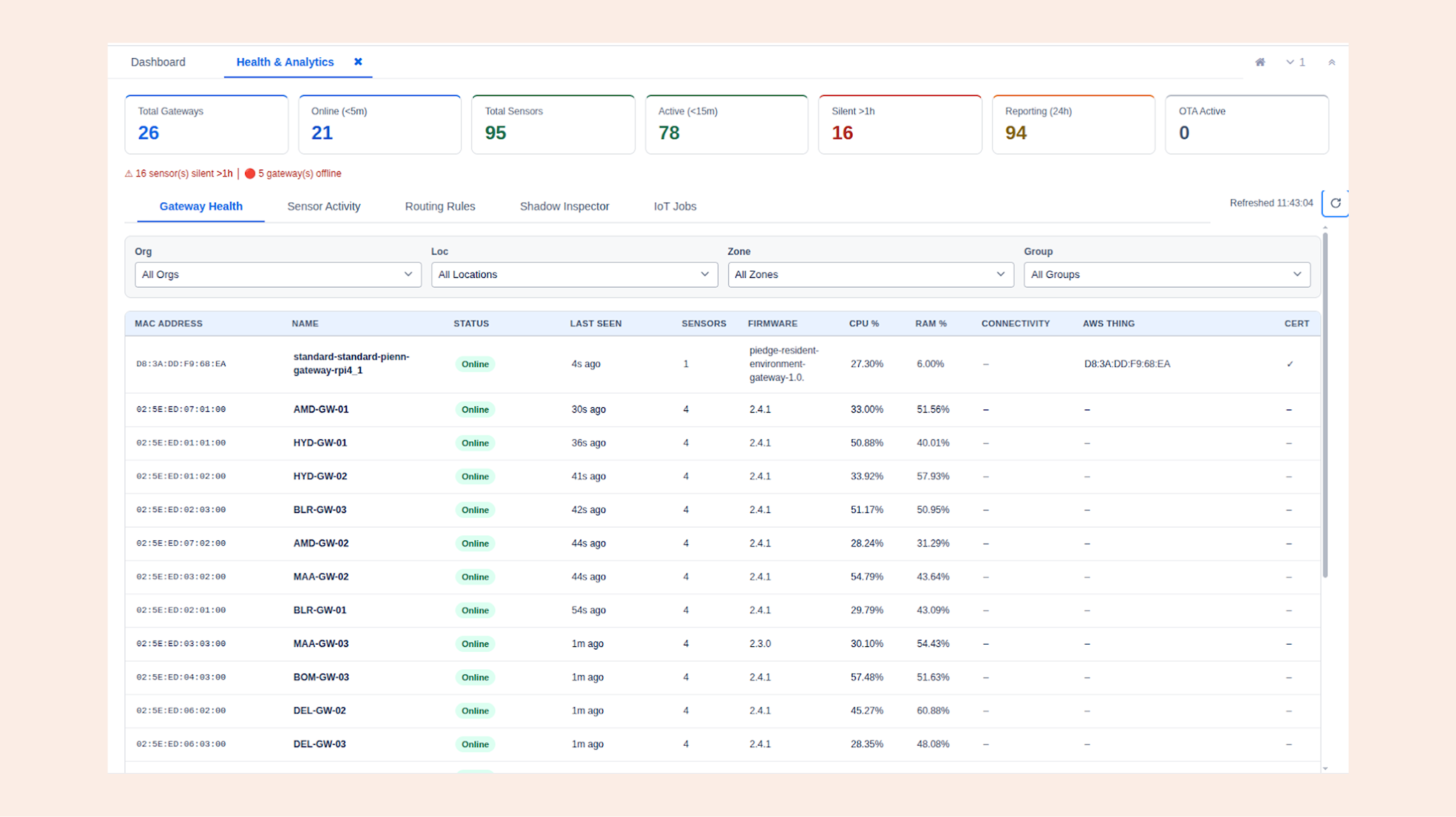
Pi Edge handles what's happening in the physical world. For many engagements that's the whole scope, but it's rarely where the customer's ambition stops.
Around it sits the rest of the PIPRA family: PiERP for the business backbone of finance, procurement, and sales; WarePro for warehouse and inventory operations; MRO for maintenance, spares, and asset readiness; Nija for traceability; and Kuyil, an AI layer adding search, insight, and decision support across all of them.
For a partner, this is straightforwardly commercial. A monitoring engagement that goes well leads naturally to the next conversation: maintenance driven by actual equipment condition, inventory that reflects what's really happening, traceability built on real conditions rather than assumptions. You're not starting from zero to have those conversations, and you're not handing the customer to someone else to have them.
If you deliver connected solutions for your customers, or you build the sensors those solutions depend on, we'd like to talk about what a partnership looks like.
We can walk you through the platform properly, discuss where it fits your existing practice, and be candid about where it doesn't.