
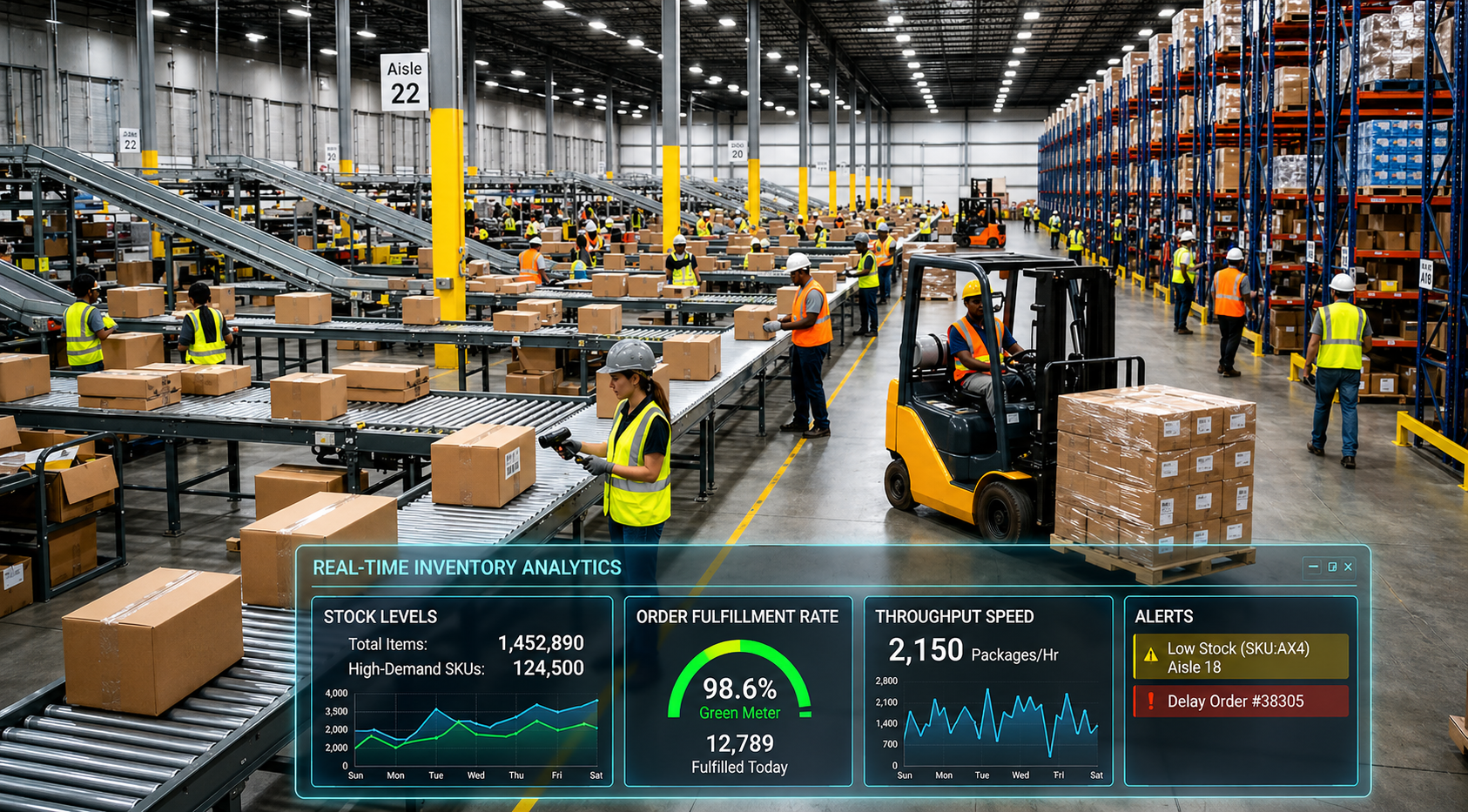
Warehouses have evolved from being passive storage spaces into highly dynamic operational hubs that directly influence customer experience, profitability, supply chain resilience, and business scalability. In today’s fast-moving supply chain environment, they directly influence customer experience, profitability, operational agility, and business scalability.
The growth of ecommerce, omnichannel retailing, global sourcing, rapid delivery commitments, and volatile demand patterns has transformed warehouse operations into a strategic function rather than a backend support activity. Customers now expect real-time order visibility, faster fulfillment, and near-perfect accuracy.
However, despite technological advancements, many warehouses across the world continue to struggle with deep operational inefficiencies. From inventory inaccuracies and labour shortages to disconnected systems and poor space utilization, warehouse pain points have become more complex and costly than ever before.
In India, these challenges are further amplified by fragmented supply chains, infrastructure inconsistencies, multi-location operations, rapid ecommerce expansion, price pressure and varying levels of technology adoption across industries.
Organizations that fail to address these warehouse management challenges risk operational disruptions, rising fulfillment costs, poor customer experiences, and declining competitiveness.
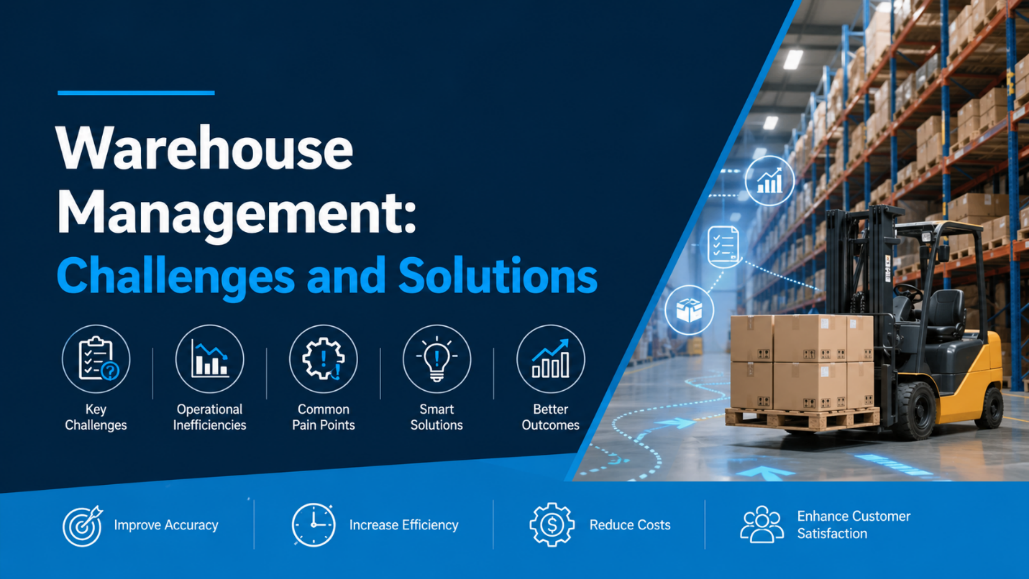
Modern warehouses are expected to achieve a difficult balance:
The result is a growing list of operational pain points that affect not only warehouse performance but overall business outcomes.
PAIN POINTS OF THE INDUSTRY
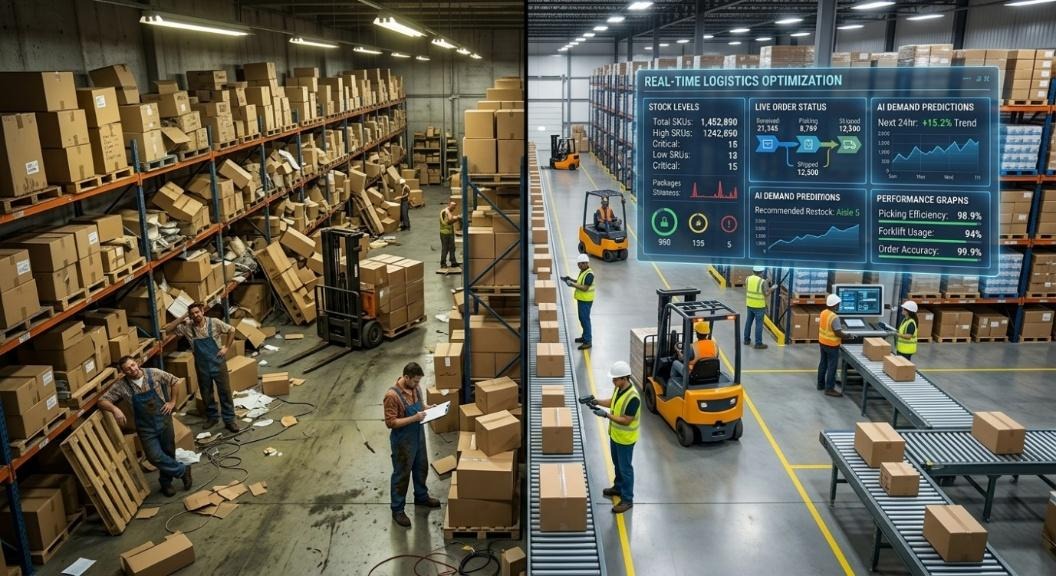
Inventory accuracy remains one of the biggest warehouse management challenges globally.
Many organizations still struggle with:
Even minor inaccuracies can create major downstream disruptions.
When warehouse teams cannot trust inventory data, businesses experience:
In fast-moving environments, inaccurate inventory visibility can significantly damage operational efficiency.
Strategic Impact
Inventory inaccuracies disrupt forecasting, fulfillment, and procurement operations, leading to stockouts, overstocking, delayed shipments, revenue loss, and poor customer experience. Over time, inaccurate inventory visibility increases operational costs and weakens supply chain agility.
Strategic Solution
Warepro from Pipra Solutions is a modern WMS, which improves inventory accuracy through real-time tracking, barcode/RFID integration, automated validations, and bin-level visibility. This reduces manual errors, improves stock reliability, and enables faster, more efficient warehouse operations.
Organizations that implement intelligent inventory visibility systems reduce operational uncertainty and gain stronger control over supply chain execution.
Order picking is one of the most labour-intensive and time-consuming warehouse activities.
In poorly optimized warehouses, employees spend excessive time:
This reduces productivity while increasing labour costs.
As order volumes increase, inefficient picking processes create operational bottlenecks that delay fulfillment timelines.
Strategic Impact
Poor picking efficiency slows order fulfillment, reduces labour productivity, and limits warehouse throughput and scalability. In fast-paced ecommerce environments, delayed and inaccurate picking can negatively impact delivery commitments and customer retention.
Strategic Solution
Warepro an advanced WMS-drives picking optimization and improves efficiency through intelligent routing, zone and batch picking, wave management, SKU velocity analysis, and real-time picker guidance. Strategic SKU placement further reduces travel time and accelerates order fulfillment.
Organizations that optimize warehouse movement patterns significantly improve operational productivity while reducing labour fatigue.
Many warehouse operations still rely heavily on manual data entry and spreadsheet-based processes.
This creates vulnerabilities such as:
Manual operations become especially problematic during peak demand periods.
Strategic Impact
Manual warehouse operations limit scalability and increase error rates, operational costs, training complexity, and fulfillment delays. Additionally, dependence on manual processes reduces real-time operational visibility and decision-making efficiency for management teams.
Strategic Solution
Warepro by Pipra enables warehouse digitization through advanced WMS integration, offering automated scanning, mobile-enabled operations, real-time transaction updates, automated task allocation, and workflow automation. This improves operational speed, accuracy, visibility, and overall process accountability.
Many organizations operate with disconnected systems where warehouse data exists separately from procurement, sales, logistics, and finance systems.
This fragmentation creates operational silos.
Warehouse managers often lack visibility into:
Without real-time visibility, decision-making becomes reactive instead of proactive.
Strategic Impact
Limited operational visibility leads to slower response times, inaccurate forecasting, higher operational risks, delayed customer communication, and inefficient resource planning, ultimately affecting overall supply chain performance.
Strategic Solution
Warepro by Pipra creates a unified warehouse ecosystem through real-time dashboards, ERP and transportation integrations, automated alerts, workforce visibility tools, and predictive analytics. This enables faster, data-driven decision-making and improved operational control.
Poor warehouse layout design significantly impacts operational efficiency.
Common space utilization problems include:
As businesses scale, inefficient layouts create severe operational slowdowns.
Strategic Impact
Poor space utilization reduces warehouse throughput, slows picking efficiency, limits inventory accessibility, and increases safety risks. Without proper optimization, businesses may invest in additional warehouse space despite underutilized existing capacity.
Strategic Solution
Warepro by Pipra enhances warehouse efficiency through dynamic slotting, ABC inventory classification, velocity-based storage allocation, multi-level storage optimization, heat mapping analytics, and automated replenishment planning. This improves space utilization, movement efficiency, and overall warehouse productivity.
Labour shortages are becoming a major global warehouse challenge.
Warehouses face increasing pressure related to:
Warehouse work is physically demanding, and inefficient systems often worsen employee fatigue.
Strategic Impact
Labour inefficiencies reduce order fulfillment speed, limit operational scalability, increase costs, and affect service consistency. High employee turnover further raises onboarding and training expenses, impacting overall warehouse productivity.
Strategic Solution
Warepro by Pipra improves workforce management through task prioritization, productivity tracking, mobile-enabled workflows, role-based access control, labour analytics, and performance monitoring dashboards. Intelligent workload allocation enhances workforce efficiency and operational productivity.
Many warehouses operate with multiple disconnected technologies.
These systems often fail to integrate effectively, resulting in:
Technology fragmentation creates operational friction.
Strategic Impact
Disconnected systems prevent organizations from building agile supply chains. Operational inefficiencies increase as teams manually bridge system gaps.
Strategic Solution
Warepro by Pipra enables seamless integration across WMS platforms, ERP systems, transportation networks, ecommerce platforms, procurement systems, and automation technologies. This connected digital ecosystem delivers synchronized operational visibility, improved coordination, and greater supply chain efficiency.
India-Specific Warehouse Management Pain Points
While many warehouse challenges are global, India presents a unique operational environment with additional complexities.
Rapid digital commerce growth, infrastructure diversity, multi-state operations, and uneven technology adoption have created highly fragmented warehouse ecosystems.
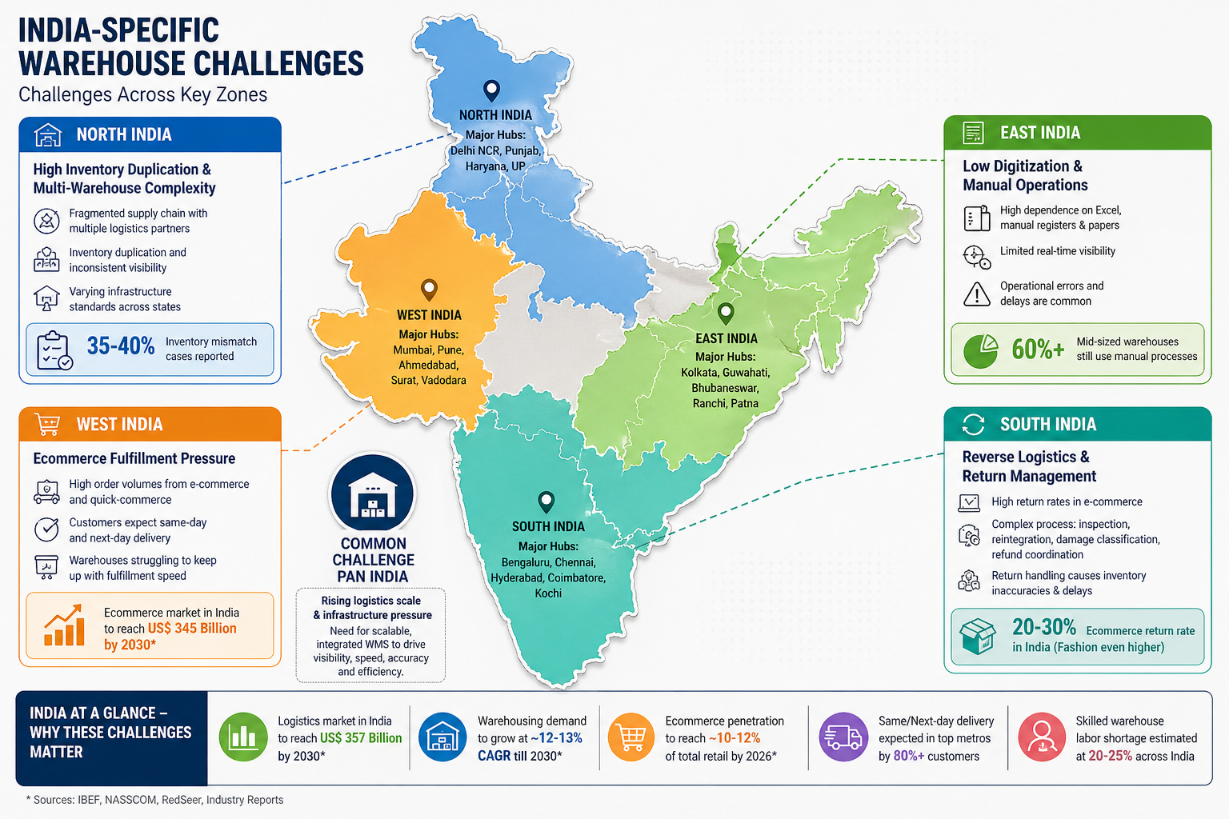
India-Specific Warehouse Challenges by Region
A. North India – High Inventory Duplication & Multi-Warehouse Complexity
States such as Delhi-NCR, Punjab, and Haryana operate large distribution hubs serving multiple regions. However, fragmented supply chains and dependence on multiple logistics partners often create inventory duplication, delayed visibility, and inconsistent fulfillment standards across warehouses.
Key Challenge: Fragmented warehouse visibility and high inventory mismatch risks.
B. West India – Ecommerce Fulfillment Pressure
Maharashtra and Gujarat are major ecommerce and logistics hubs facing intense fulfillment pressure due to rapid order growth and quick-commerce expansion. India’s ecommerce market is projected to reach US$345 billion by 2030.
Key Challenge: Faster fulfillment expectations including same-day and next-day deliveries.
C. South India – Reverse Logistics & Return Management
South Indian ecommerce and retail hubs handle significant reverse logistics volumes, especially in fashion and electronics categories. Ecommerce return rates in India can reach 20–30%, with fashion returns going even higher.
Key Challenge: Managing returns, inspections, reintegration, and refund coordination efficiently.
D. East India – Low Digitization & Manual Operations
Many mid-sized warehouses across eastern regions still depend on spreadsheets, paper-based tracking, and manual inventory handling, limiting scalability and increasing operational errors.
Key Challenge: Low warehouse digitization and limited real-time operational visibility.
Pan-India Challenge – Rising Logistics Scale & Infrastructure Pressure
India’s logistics market is expected to reach nearly US$357 billion by 2030, while warehousing demand continues to grow rapidly.
Key Challenge: Scaling warehouse operations efficiently while maintaining accuracy, speed, and operational visibility across regions.
To overcome these challenges, Indian businesses increasingly require centralized and scalable WMS platforms that enable real-time visibility, automation, mobile-enabled operations, and integrated return management to improve efficiency, accuracy, and supply chain agility.
Why Is Pipra Solutions Warepro WMS a Strategic Investment and the Best Solution?
Warepro WMS by Pipra Solutions Pvt Ltd stands out as the premier warehouse management system, comprehensively addressing all major pain points from inventory inaccuracies and inefficient picking to labour shortages, space utilization issues, and system fragmentation through its full spectrum of basic and advanced functionalities.
Beyond core operations like receiving, put-away, picking, packing, storage, replenishment, confirmation, and shipping, Warepro delivers sophisticated capabilities including cross-docking, kit building, serial number tracking, cubing for volume optimization, multi-level storage, forklift guidance, hazardous materials handling, labour management, and scrapping-features often absent in standard WMS platforms.
As a fully integrated ecosystem, Warepro synchronizes in real-time with ERP systems, transportation management, ecommerce platforms, and order management tools, creating a single source of truth that eliminates data silos and manual updates.
Core Advantages
Strengths
Pipra continuously enhances Warepro with AI-driven forecasting, IoT readiness, and automation integrations, helping diverse operations worldwide achieve 99%+ accuracy and scalable throughput.
Businesses using Warepro report dramatic efficiency gains—like non-profits streamlining bin-level counts and ecommerce firms enabling same-day fulfillment improving its transformative impact across industries and geographies.
Conclusion: From Operational Warehouses to Intelligent Supply Chain Hubs

Warehouse pain points are no longer isolated operational inconveniences. They represent strategic business risks. Inventory inaccuracies, labour inefficiencies, disconnected systems, poor visibility, and fulfillment delays directly impact profitability, customer experience, and supply chain resilience.
Globally, businesses are recognizing that warehouse transformation is no longer optional. In India, the urgency is even greater due to rapid ecommerce growth, fragmented logistics ecosystems, and increasing customer expectations.
Organizations that embrace intelligent warehouse management strategies and modern WMS ecosystems will be better positioned to:
The future belongs to warehouses that are not just operationally functional—but strategically intelligent