

At Pipra Solutions, we believe the future belongs to intelligent enterprises powered by AI, data, and connected ecosystems. Through our expertise in AI, Digital Twins, Computer Vision, IoT, Machine Learning, and advanced analytics, we are helping manufacturers transform operations, improve productivity, enhance quality, and unlock sustainable growth.
AI is no longer a futuristic concept—it is rapidly becoming a strategic imperative. Forward-looking manufacturers are leveraging AI not merely to automate processes but to create self-learning, self-optimizing factories capable of making faster and smarter decisions.
Human-centric AI and autonomous operations are emerging.
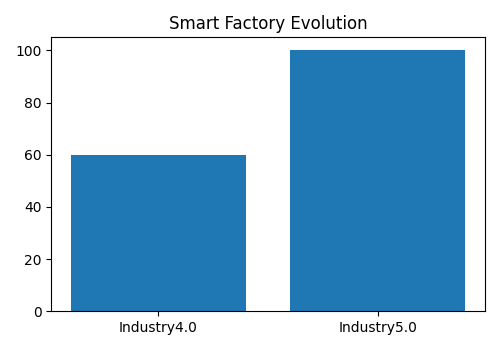
Insight: Advanced benchmark and forecast relevant to AI-driven manufacturing transformation.
Sources: WEF

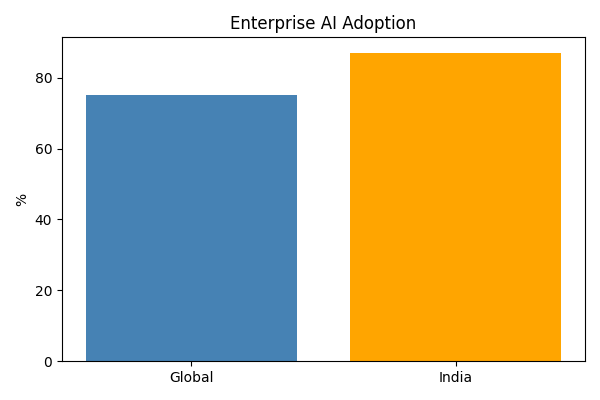
India leads global averages in enterprise AI adoption.
Globally AI is becoming all pervasive.
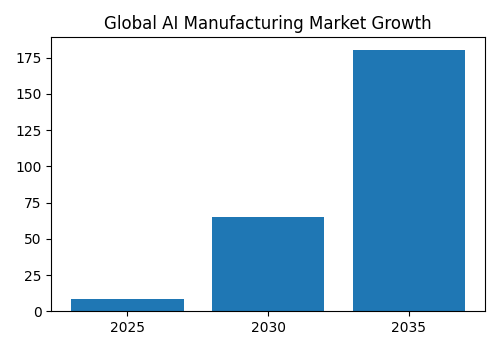
Insight: This figure highlights major trends and comparative benchmarks relevant to AI-driven manufacturing transformation.
Sources: MarketsandMarkets, Fortune Business Insights
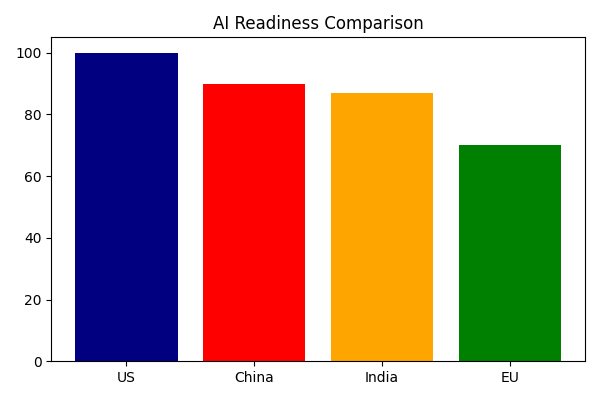
Insight: Advanced benchmark and forecast relevant to AI-driven manufacturing transformation.
Sources: Stanford AI Index, IBM AI Adoption Index
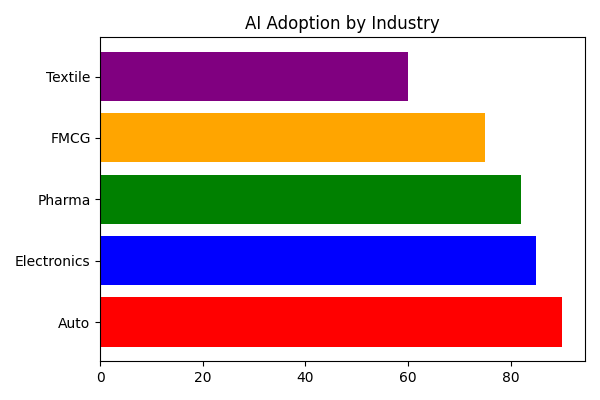
Figure 5a and 5b illustrates how AI adoption varies across industries, highlighting that sectors such as technology, manufacturing, financial services, and healthcare are leading the transformation.
Manufacturing continues to accelerate AI investments to improve operational efficiency, predictive maintenance, quality control, and supply chain resilience. The comparison also indicates that industries with higher digital maturity are realizing greater business value from AI, while others are still in the early stages of adoption.
Overall, the figure reinforces that AI is becoming a strategic business capability rather than a niche technology, driving competitiveness and long-term growth across industries.
Insight: This figure highlights major trends and comparative benchmarks relevant to AI-driven manufacturing transformation.
Sources: Deloitte, McKinsey
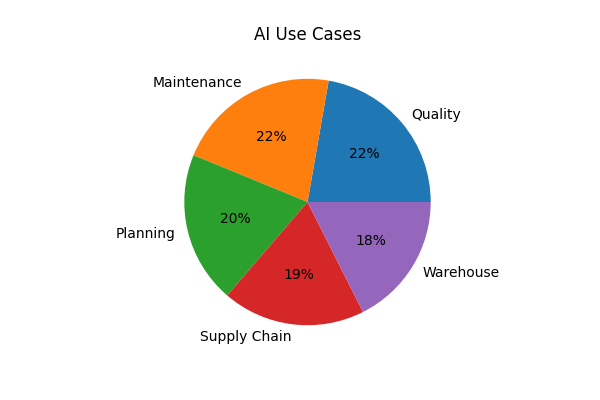
The AI investment mix has evolved in response to the changing maturity of enterprise AI adoption. Early investments were primarily focused on pilot projects and standalone AI models, but organizations soon realized that these initiatives could not scale without robust data infrastructure, cloud platforms, and seamless system integration.
As AI began demonstrating measurable business value, investment shifted toward enterprise-wide deployment, automation, governance, cybersecurity, and workforce development. This balanced investment approach reflects the understanding that successful AI transformation depends not only on advanced algorithms but also on the supporting technology, skilled talent, and organizational processes required to operationalize AI at scale.
Insight: This figure highlights major trends and comparative benchmarks relevant to AI-driven manufacturing transformation.
Sources: Gartner, IDC
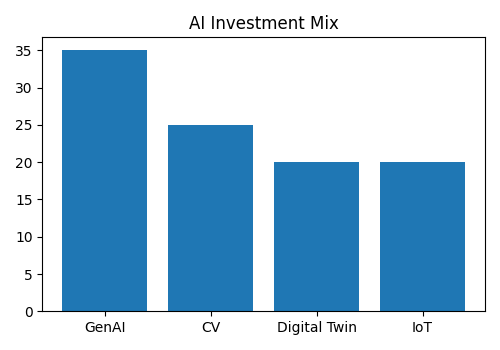
Figure 6 illustrates how organizations are allocating their AI investments across key capability areas to maximize business value. The largest share of investment is typically directed toward AI platforms, data infrastructure, and cloud technologies, as these form the foundation for scalable AI deployment. Significant investments are also made in advanced analytics, machine learning models, automation, cybersecurity, and workforce upskilling to ensure successful implementation and adoption.
Manufacturing organizations worldwide are facing several challenges:
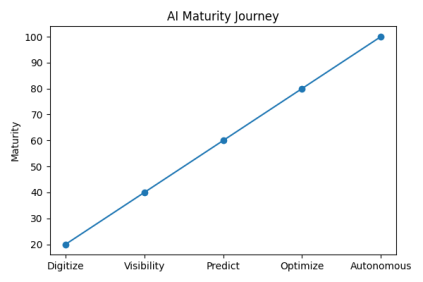
Traditional ERP and automation systems provide visibility, but they are not designed to predict, optimize, and autonomously respond to changing conditions. AI bridges this gap by enabling factories to become intelligent and adaptive. The AI maturity has been depicted in the figure 7 below.
Modern manufacturing is evolving from automation to autonomy. Instead of merely executing predefined processes, AI-driven factories can:
The result is a smart, connected, and resilient manufacturing ecosystem.

Insight: Advanced benchmark and forecast relevant to AI-driven manufacturing transformation.
Sources: Stanford AI Index, IBM AI Adoption Index
Computer Vision is revolutionizing manufacturing by enabling machines to "see." Applications include:
Identify:
Detect:
Track:
Automate:
Computer Vision significantly improves quality while reducing manual intervention.
Insight: Advanced benchmark and forecast relevant to AI-driven manufacturing transformation.
Sources: Gartner, Deloitte
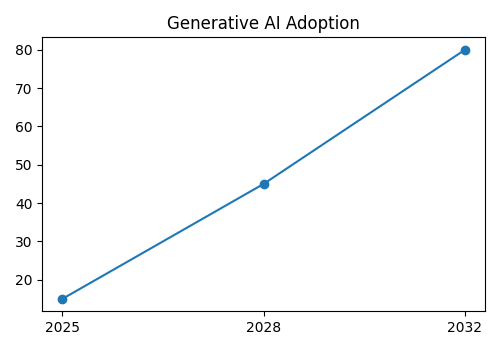
The next evolution combines automation with human-centric AI, sustainability and resilience. Generative AI represents the next frontier in manufacturing transformation. Manufacturers face rising costs, supply chain volatility, labor shortages and quality pressures. AI enables predictive maintenance, autonomous decision making, intelligent scheduling and demand forecasting.
Insight: Advanced benchmark and forecast relevant to AI-driven manufacturing transformation.
Sources: McKinsey, Gartner
AI copilots can help engineers and operators by:
Instantly answer questions regarding:
Analyze historical failures and recommend corrective actions.
Generate:
Assist with:
Generative AI transforms organizational knowledge into a strategic asset.
The future of manufacturing lies in the convergence of:
IoT: Real-time machine and environmental data.
Artificial Intelligence: Predictive analytics and decision intelligence.
Digital Twins: Simulation and optimization.
Computer Vision: Automated inspection and monitoring.
Generative AI: Human-machine collaboration.
Together, these technologies create autonomous operations capable of sensing, learning, and adapting continuously.
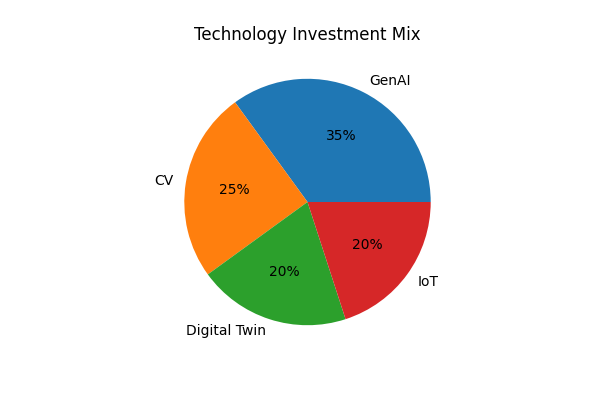
Pipra Solutions provides AI, ML, Computer Vision, Digital Twins, IoT and WarePro WMS capabilities. Solutions integrate with ERP systems and deliver intelligent manufacturing ecosystems.
At Pipra Solutions, we recommend a phased approach:
This approach allows organizations to achieve quick wins while building long-term transformation capabilities.
The manufacturing industry is entering an era where intelligence will define competitiveness. AI is no longer an experimental technology or a future aspiration—it is becoming the operating system of modern manufacturing. Organizations that successfully combine Artificial Intelligence, Machine Learning, Computer Vision, IoT, Digital Twins, and Generative AI will be better positioned to improve productivity, enhance quality, build resilient supply chains, reduce costs, and achieve sustainable growth.
However, technology alone does not create transformation. Success depends on adopting a structured roadmap that aligns digital capabilities with business objectives while enabling people, processes, and data to work together as an intelligent ecosystem.
At Pipra Solutions, we are committed to helping manufacturers navigate this transformation through practical, scalable, and enterprise-ready AI solutions that deliver measurable business outcomes. The factories of the future are not years away they are being built today. The question is no longer whether manufacturers should adopt AI, but how quickly they can harness its full potential to create a lasting competitive advantage.