
We’re now AWS Partner!-
Explore our AWS cloud Offerings

Strengthening Warehouse Reliability with WarePro’s IoT-based Solutions

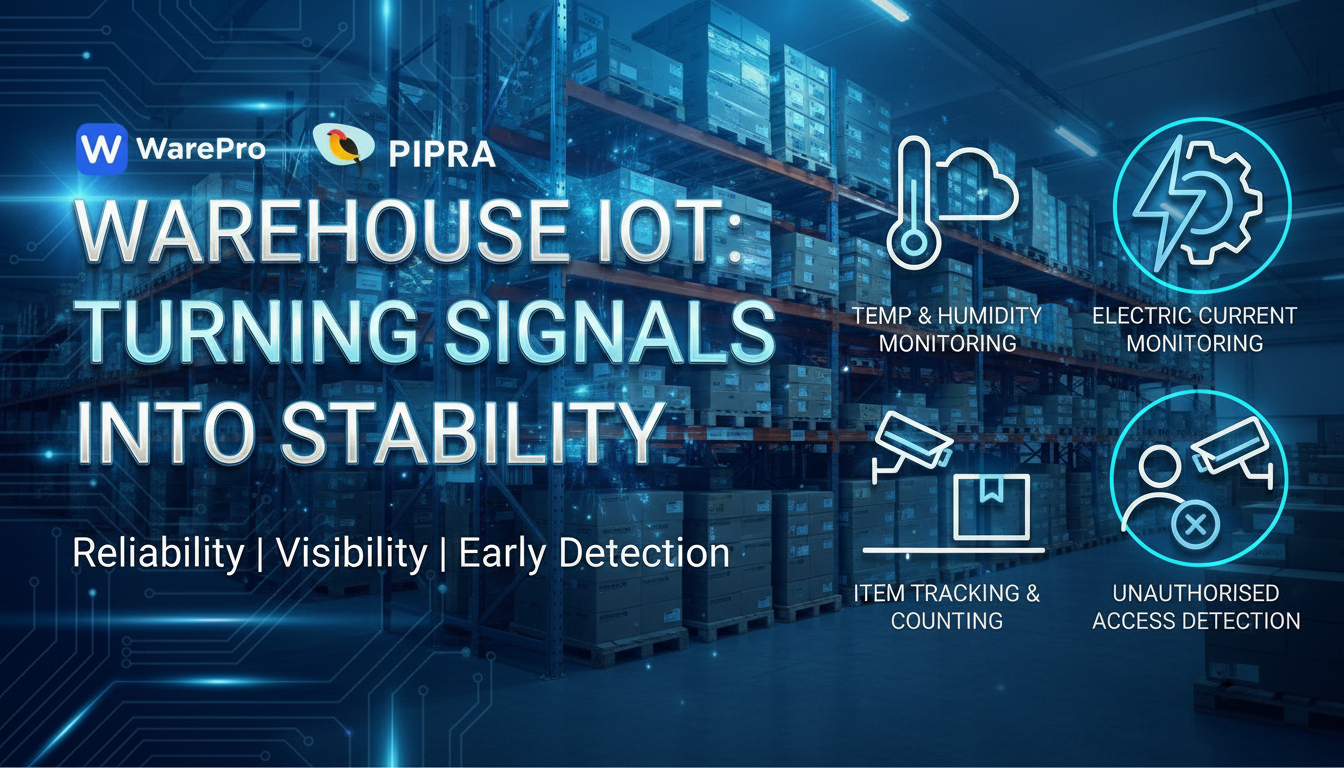
In an environment where warehouses are expected to operate with increasing speed, accuracy and consistency, reliability has become a defining operational challenge. Small gaps in visibility - whether in environmental conditions, power stability, inventory movement or access control - can quietly accumulate into costly disruptions. As warehouse operations grow more complex, traditional manual checks and reactive systems struggle to keep pace. In this blog, we examine how WarePro’s IoT-based offerings introduce continuous, context-aware visibility at the operational edge, helping warehouses detect early signs of deviation, reduce risk and maintain predictable day-to-day performance.
Published on
January 5, 2026

Modern warehouses are busy, messy and continuously moving environments where the smallest oversight can easily transform to an expensive problem. A complex and dynamic domain like this requires solutions which provide stability and reliability. This is where automation and IoT come in, as quiet enablers of consistency.

WarePro’s IoT offerings are designed with this philosophy in mind. They focus on eliminating blind spots, reducing dependency on manual intervention and giving operations teams early visibility into issues that typically surface too late.

A modern warehouse is a flurry of activity

Temperature and Humidity Monitoring

Environmental conditions rarely fail catastrophically. In reality, there are small imperceptible drifts which could lead to spoilage unless caught early.

  • WarePro uses custom-made IoT sensors for detecting temperature and humidity that feature Wi-Fi and Bluetooth Low Energy (BLE) capabilities along with a rechargeable battery.
  • The number of sensors depends on the size of the room, being positioned to avoid localized bias and deadzones. 
  • These sensors feed into a dedicated Raspberry Pi (RPI) that receives the readings and logs it to the central database, thereby creating a reliable historical record of storage conditions. 
  • A built-in battery backup and dual-layer local backup (in both sensors as well as the RPI) ensures that the readings are never lost, even in adverse conditions of poor connectivity or loss of power.

Use Case:

This solution has been deployed in a plant tissue culture storage facility, which is highly dependent on maintaining the correct temperature and humidity levels for the stored cultures. There are hourly readings logged and automatic reports are generated to ensure conditions have been stable.
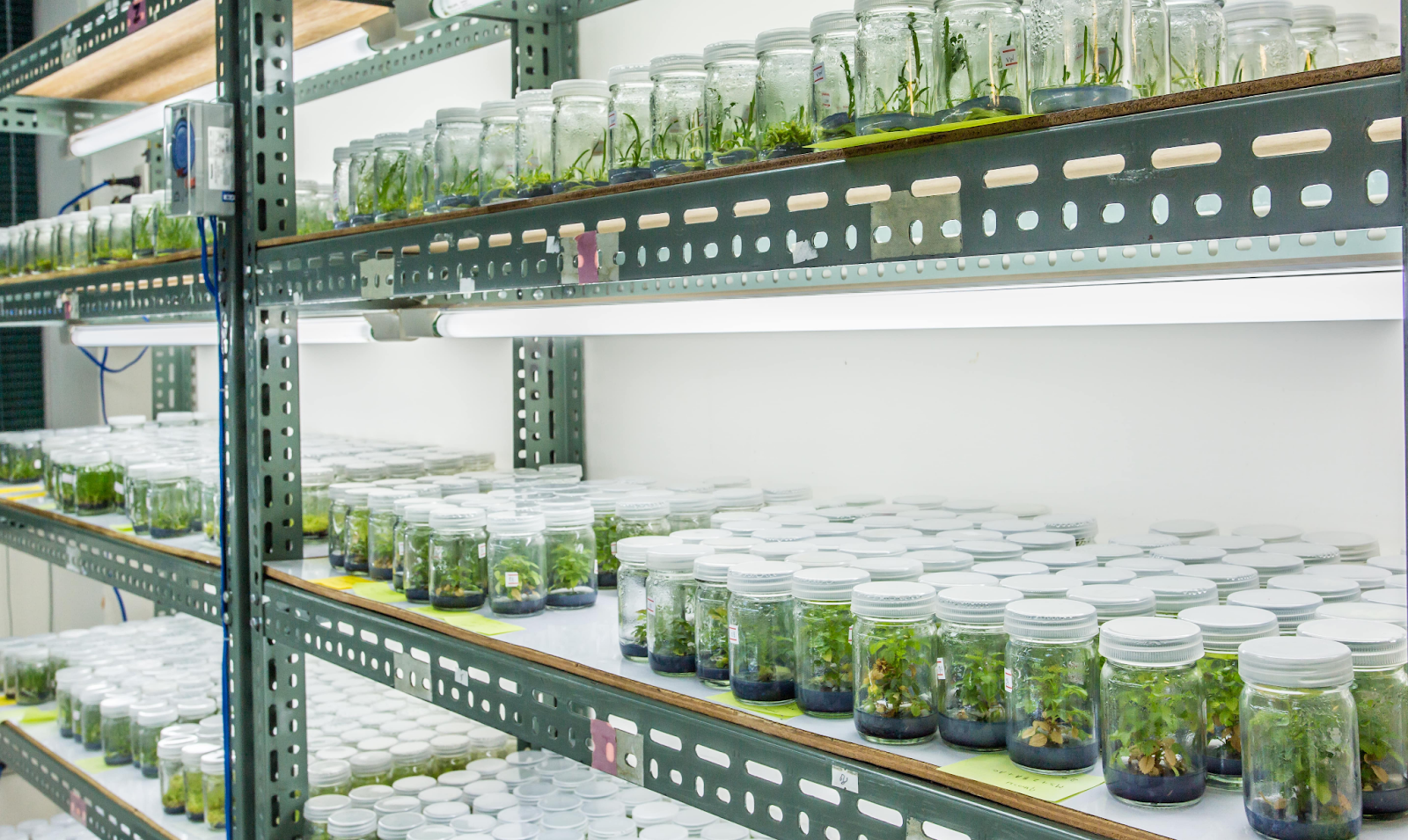
Plant tissue samples are extremely sensitive to temperature and humidity levels

Electric Current Monitoring

Electrical issues in warehouse environments rarely present themselves as immediate failures. More often, they begin as subtle irregularities in power draw that go unnoticed until equipment performance degrades or downtime occurs.

  • Custom IoT current sensors are installed directly within relay boxes to measure amperage at the point of supply
  • Readings are logged hourly via a dedicated Raspberry Pi (RPI), creating a reliable historical record of electrical behaviour across rooms, rows and equipment groups.
  • Establishing a clear baseline of normal consumption makes it easier to identify anomalies such as unexpected load increases, irregular draw patterns or power usage during non-operational hours.
  • These deviations often point to early-stage issues including failing relays, inefficient equipment or configuration problems in the electrical setup.
  • Over time, the same data can be used to reduce electricity expenses by identifying avoidable consumption and enabling informed actions such as load balancing, scheduling adjustments or equipment optimisation.

Use Case:

This solution has been deployed alongside temperature and humidity monitoring in a plant tissue culture facility, where each storage room consists of multiple rows controlled through relay boxes that manage UV lighting. Hourly amperage readings from these relay boxes are used to monitor power supply stability across rows, helping identify issues such as inconsistent supply, failed relays or unexpected drops in load. This early visibility allows corrective action to be taken before lighting disruptions impact storage conditions or culture integrity.
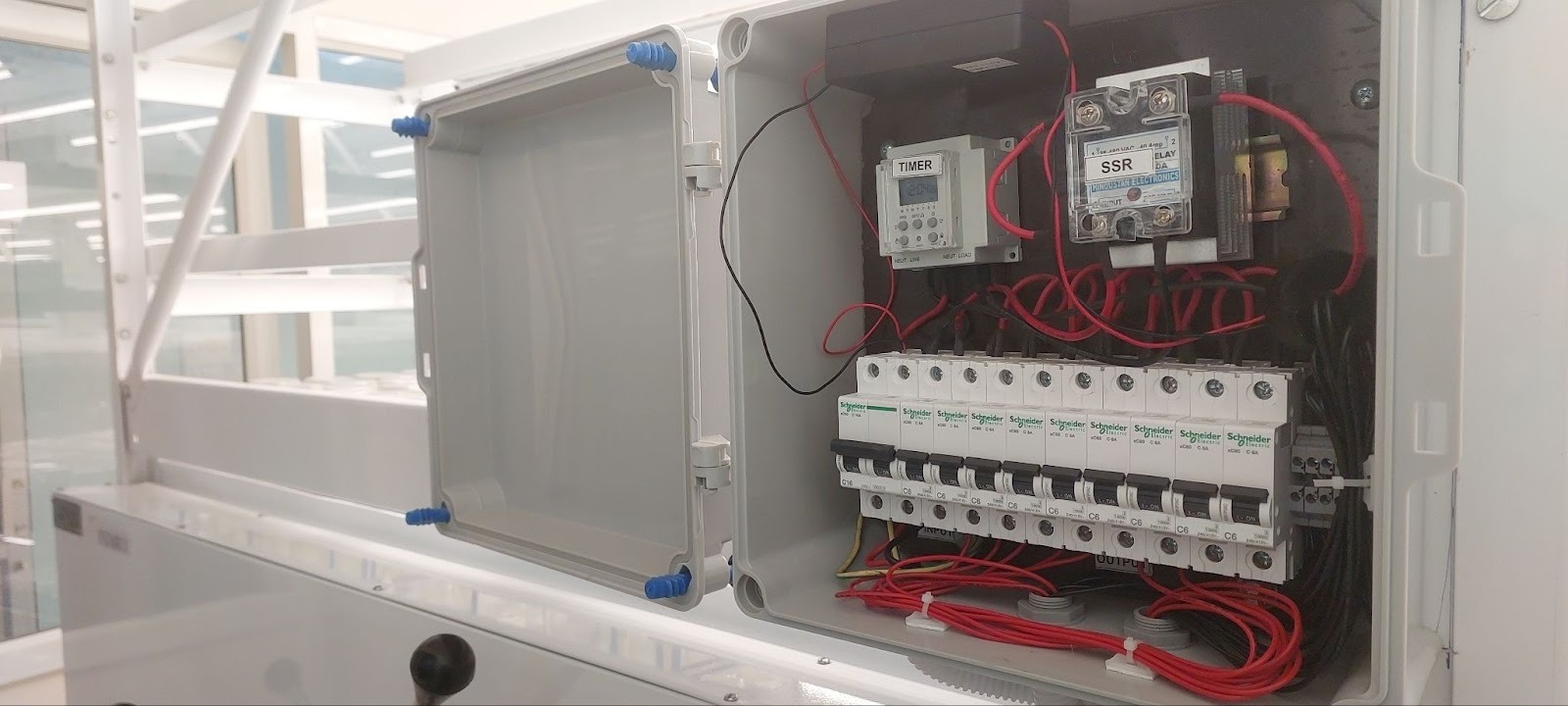
Easy installation of the sensor (in black, at the top) within the relay box

Item In / Out Counting and Tracking

One of the common challenges in warehousing and logistics is inventory mismatch. They accumulate quietly across shifts, often as a result of human error. 

  • WarePro offers a solution for tracking these item movements during loading and unloading, using an off-the-shelf IP camera and a Raspberry Pi (RPI).
  • The system is triggered using a companion mobile app that allows the shift manager/loading operator to enter in the item details (connecting the tracking to the WMS database). 
  • The system is capable of tracking the items in a wide scale of operations - be it low-tech manual processing, or automated conveyor belt setups. 

This gives an additional verification layer for item counts and inventory, and provides an easy way to determine the origin of any misalignment of inventory records.

Use Case:

This solution has been deployed in a small/medium scale warehouse operation, to eliminate human counting errors and provide an immediate check on the quantity of goods. The inventory is automatically updated in the database, providing a reliable, up-to-date snapshot of the warehouse

Unauthorised Person Detection

Warehouses are designed for movement, but not all movement is expected or permitted. In large, active environments, access violations often occur not through intent, but through process gaps, shift changes or momentary lapses in supervision.

  • WarePro provides unauthorised person detection using fixed IP cameras integrated with a Raspberry Pi (RPI) for local processing. 
  • The system monitors defined zones and detects the presence of individuals where access is restricted, without requiring explicit interaction from operators. Violations are immediately flagged and an image is sent as a notification to the mobile app.
  • The system is capable of differentiating between unaccompanied unauthorised access and situations where an unauthorised individual is present alongside an authorised person. In such cases, alert severity can be adjusted accordingly, reducing unnecessary escalation while still maintaining an auditable record of the event.
  • Additionally, gaze detection is used to determine whether a supervisor present in the area is actively monitoring the unauthorised individual. If supervision is detected, the system records the context and applies a lower-priority alert. If not, the incident is escalated, ensuring that responsibility and oversight are clearly established rather than assumed. 

This approach adds an additional layer of oversight that operates independently of access cards or manual logs, focusing instead on what actually occurs on the warehouse floor.

Use Case:

This solution has been deployed in a warehouse environment with restricted storage zones, where unauthorised access posed a risk to both inventory integrity and safety. The system enabled early detection of access violations during shift transitions, allowing corrective measures to be taken before incidents escalated.

Turning Signals into Stability

Most warehouse issues do not begin as failures, but as small gaps in visibility that go unnoticed. Over time, these gaps turn into risk.

WarePro’s IoT offerings address this by capturing reliable signals at the source and adding context where it matters. Environmental conditions stay within control, item movements are verifiable and access is continuously observed without disrupting operations.

The outcome is a warehouse that behaves predictably, allowing teams to spend less time reacting to issues and more time running operations with confidence.

Explore how PIPRA Solutions can help your warehouse operate with greater reliability and confidence. Connect with us to discuss how these capabilities can be aligned with your existing operations.
Related blogs

Reducing Manpower in Indian Warehousing: Embracing Automation for Efficiency
Read post
How Blockchain, AI, and IoT Can Pave the Way For 0% Drugs Counterfeiting
Read post
Enhancing Operational Efficiency with Digital Twins in WMS
Read post