

In fast-paced warehouse environments, decisions can’t wait for reports, dashboards, or multiple phone calls. Teams need answers instantly. What if you could simply ask your warehouse system a question and get real-time answers? With PIPRA’s conversational AI integrated into WarePro, users can now interact with operations using natural language, whether it’s checking stock, tracking dispatches, or responding to customer queries. This is warehouse intelligence, simplified for speed and efficiency.
No More Dashboards: How Conversational AI is Transforming Warehouse Decision-Making
Warehouses move fast.
Goods come in. Orders go out. Stock moves between bins, racks, zones, and dispatch areas. Customers ask for updates. Management asks for reports. Sales teams want commitment dates. Operations teams need to know what is delayed, what is available, and what requires attention.
In such an environment, speed of information is as important as speed of movement.
But in many warehouses, information is still difficult to access.
The data may exist inside a warehouse management system. It may be available in reports. It may be visible on dashboards. It may be known to a supervisor. But when someone needs a quick answer, they still have to search, navigate, call, wait, or escalate.
This slows down decisions.
And in warehouse operations, delayed decisions directly impact customer experience.
Most modern warehouses are not completely data-starved. They already generate plenty of operational data.
They know what stock exists. They know what orders are pending. They know what has been dispatched. They know what is delayed. They know which items are moving fast. They know where exceptions are occurring.
The real problem is access.
Information is often locked behind:
• Dashboards
• Reports
• System menus
• User permissions
• Excel exports
• Specific team members
• Manual follow-ups
For a senior manager, customer support executive, sales coordinator, warehouse supervisor, or field team member, this creates friction.
They may not need a full dashboard. They may simply need one answer.
For example:
• “Do we have enough stock for this customer order?”
• “Which dispatches are delayed today?”
• “What is the current stock of this item?”
• “Which orders are ready to ship?”
• “Has this item been received?”
• “What was dispatched yesterday?”
These are simple questions. But getting answers may still take time.
Conversational AI changes the way users interact with systems.
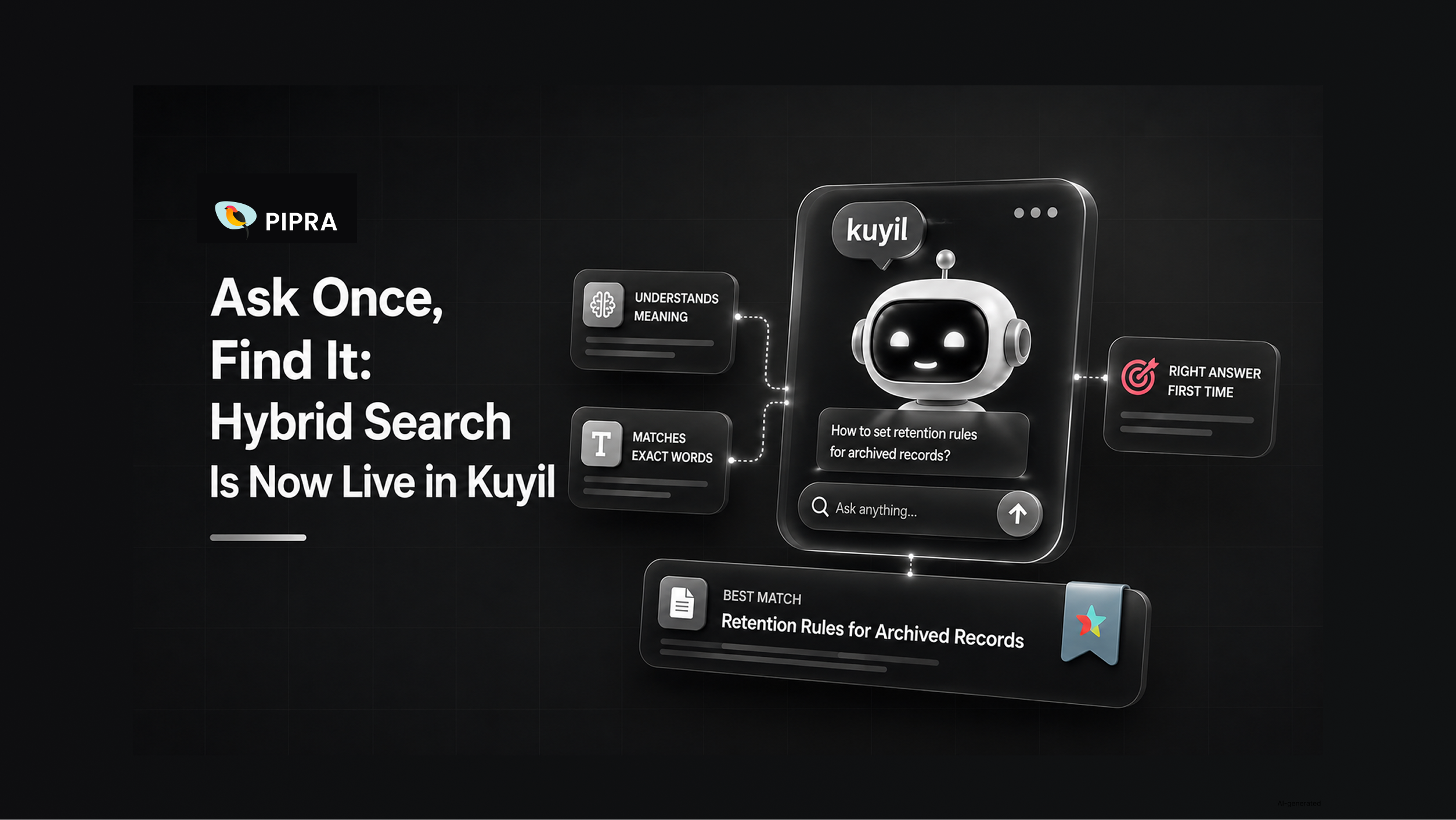
Instead of navigating through menus, filtering reports, or depending on another person, users can ask questions in natural language.
This is especially useful in warehouse environments, where users are often on the move and may not have time to sit with a laptop or analyze dashboards.
With a conversational interface connected to WarePro, users can get quick operational answers by simply asking the system.
The goal is not to replace the warehouse management system. The goal is to make the system easier and faster to use.
Think of it as adding an intelligent conversational layer on top of warehouse operations.
The warehouse system continues to manage transactions, inventory, workflows, and controls. Conversational AI makes that information more accessible to the people who need it.
Dashboards are useful. Reports are useful. Applications are useful.
But they are not always the fastest way to answer operational questions.
Dashboards are designed for visualization and monitoring. Reports are designed for analysis. Applications are designed for structured workflows.
But day-to-day operations often require quick answers.
A warehouse manager may be walking through the floor. A sales person may be speaking to a customer. A leadership team member may be reviewing urgent commitments. A support person may need to respond immediately.
In such moments, the best interface is not always a screen full of charts.
Sometimes, the best interface is a simple question.
Conversational AI can support warehouse users across multiple roles.
Supervisors can quickly check pending activities, delayed dispatches, stock status, or exception alerts without navigating multiple screens.
Sales and support teams can respond faster to customer queries about stock availability, order status, or dispatch updates.
Managers can get quick summaries of the day’s operations, pending tasks, and performance bottlenecks.
Business leaders can ask high-level questions and get instant operational visibility without waiting for prepared reports.
Users on the move can interact with the system more naturally, reducing dependency on office-based access.
The value of conversational AI is not only convenience. It creates measurable operational advantages.
When customer-facing teams get instant information, they can respond faster and with greater confidence.
Teams no longer need to call warehouse staff for every basic update. This reduces interruptions and improves productivity.
Managers can act faster because operational information is easier to access.
When users can interact naturally, they are more likely to use the system regularly.
Teams spend less time generating routine reports and more time solving actual operational issues.
Imagine a customer calls and asks whether a particular item can be dispatched today.
In a traditional setup, the sales or support person may need to check with the warehouse team, look up a report, or wait for confirmation.
With a conversational interface, the user can ask:
“Is Item X available for dispatch today?”
The system can provide a quick response based on available operational data.
This improves customer experience and reduces internal back-and-forth.
Now imagine the same capability applied across hundreds of everyday questions.
That is where the real value emerges.
For small and medium businesses, operational knowledge is often concentrated in a few key people.
One supervisor knows the stock movement. One manager knows pending dispatches. One team member understands the reporting process. One person knows how to extract the right information.
This creates dependency.
Conversational AI reduces this dependency by making information more accessible across the organization.
For SMEs, this can be especially powerful because they often need to move fast with lean teams.
Instead of adding more reporting layers, businesses can make existing systems more usable.
WarePro remains the core operational system.
It handles warehouse processes, inventory movement, controls, workflows, and reporting.
Conversational AI adds a new layer of usability.
It makes WarePro more accessible, especially for quick queries and real-time operational visibility.
This is similar to how people use search engines or voice assistants in everyday life. They do not want to navigate complex menus for every answer. They want to ask and get a response.
Warehousing is moving in the same direction.
The future of warehouse technology is not only automation. It is simplification.
Businesses do not want more complexity. They want faster answers, cleaner workflows, better visibility, and fewer dependencies.
Conversational AI brings warehouse intelligence closer to the user.
It helps transform warehouse systems from passive applications into active business assistants.
This is a major step toward smarter, more responsive operations.
If your teams spend too much time searching for warehouse information, waiting for updates, or depending on reports, it may be time to explore conversational AI for your operations.
With WarePro and conversational intelligence, PIPRA Solutions can help make warehouse information instantly accessible to the people who need it most.
Connect with PIPRA Solutions to explore how conversational AI can simplify warehouse decision-making and improve customer responsiveness.